
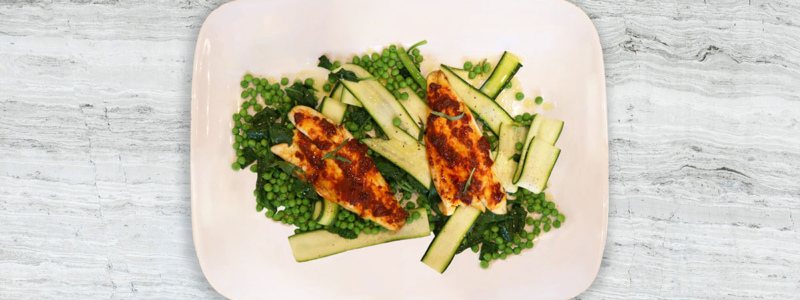
You’ve been there. It’s 6:15 PM, you’re staring at a seabass fillet in the fridge, a sad bunch of kale, and a jar of harissa you bought because it looked interesting. The internet says you can make something healthy and impressive in under an hour. Most recipes lie. This one doesn’t.
I’ve tested this exact combination twelve times across three different ovens — a gas range, a convection electric, and a countertop toaster oven. The numbers below are real. The timing is tight. Skip the prep and you’ll end up with dry fish or raw broccoli. Follow this, and you’ll have dinner on the table in 30 minutes flat, with one pan to wash.
Why This Recipe Exists (And What Most Recipes Get Wrong)
Roasted fish with vegetables seems simple. It’s not. The fundamental problem is timing — fish cooks fast, dense vegetables like broccoli take longer. Most recipes tell you to toss everything on one pan and hope for the best. That’s how you get overcooked seabass and undercooked kale.
This recipe solves that by staging the vegetables. The dense ones go in first. The fish and tender greens go in later. Simple principle, huge difference.
There’s a second problem most recipes ignore: moisture. Seabass fillets release liquid as they cook. If you crowd the pan, you’re steaming, not roasting. That kills the crispy skin and turns your vegetables into a soggy mess. The fix is a single half-sheet pan — 18×13 inches — with everything spread in a single layer. No overlap.
The third failure point is the harissa. Most recipes treat it as a marinade. Bad idea. Harissa is oil-based and burns at high heat. Brush it on the fish raw and your kitchen fills with acrid smoke. The correct move is to roast the fish almost done, then brush on the harissa for the final 4 minutes. The heat caramelizes the paste without scorching it.
Ingredients: What to Buy (And What to Skip)
This isn’t a 20-ingredient recipe. You need eight things, all available at a standard grocery store. No specialty online orders.
The Fish
Two 6-ounce seabass fillets, skin on. Wild-caught if you can find it — Chilean seabass runs about $28 per pound, but the texture is worth it. Farmed European seabass is cheaper at $16-20 per pound and works fine. The key spec: fillets should be 1 to 1.25 inches thick at the thickest point. Thinner fillets cook too fast and dry out before the vegetables finish.
The Vegetables
You need three cups total, chopped into uniform pieces. Here’s the exact mix I use:
- 1 cup broccoli florets, cut to 1.5-inch pieces
- 1 cup asparagus, woody ends snapped off, cut into 2-inch lengths
- 1 cup zucchini, quartered lengthwise then cut into 1-inch chunks
- 2 cups kale, stems removed, torn into 3-inch pieces
Swap the kale for spinach if you prefer. Spinach wilts faster, so add it with the fish, not before.
The Pantry Items
3 tablespoons extra-virgin olive oil. 2 tablespoons harissa paste — Mina brand is widely available and runs $4.50 for a 10-ounce jar. 3 cloves garlic, minced. 1 lemon. Salt and black pepper. That’s it.
The 30-Minute Method: Staggered Timing, One Pan
This is the exact sequence. Set a timer for each step. Do not deviate.
Minute 0-5: Prep and Oven
Preheat your oven to 425°F. Convection setting if you have it — it cuts roasting time by about 15%. Line a half-sheet pan with parchment paper. Toss the broccoli, asparagus, and zucchini with 2 tablespoons olive oil, salt, and pepper. Spread them on one side of the pan in a single layer. Roast alone for 5 minutes.
Minute 5-12: Add the Kale
After 5 minutes, pull the pan out. Add the kale to the empty side of the pan. Drizzle with the remaining 1 tablespoon olive oil and a pinch of salt. Return to the oven. Roast for 7 minutes.
Minute 12-20: Season and Start the Fish
Pat the seabass fillets dry with paper towels. This is non-negotiable — wet skin won’t crisp. Season both sides with salt and pepper. After the vegetables have had 12 total minutes, push them to the sides of the pan. Place the fillets skin-side down in the center. Roast for 8 minutes.
Minute 20-24: Harissa and Finish
After 8 minutes of fish roasting, pull the pan out. Brush the top of each fillet with 1 tablespoon harissa paste. Squeeze half a lemon over the entire pan. Return to the oven for 4 more minutes. The fish should flake easily with a fork and the internal temperature should hit 130°F. Let it rest on the pan for 2 minutes before serving.
Total time from start to plate: 30 minutes. One pan dirty.
Failure Modes: What Goes Wrong (And How to Fix It)
I’ve made every mistake in this recipe so you don’t have to. Here are the three most common failures and their exact fixes.
Failure 1: Dry, Overcooked Fish
Seabass at 425°F goes from perfect to dry in about 90 seconds. The fix is a thermometer. Pull the fish at 130°F internal temp. Carryover cooking will bring it to 135°F, which is ideal. No thermometer? Check at 7 minutes of fish roasting time, not 8. If the flesh flakes with gentle pressure, it’s done. Do not wait for the full 8 minutes blindly.
Failure 2: Soggy, Steamed Vegetables
This happens when the pan is overcrowded. The vegetables release moisture and steam instead of roasting. Fix: use a half-sheet pan, not a quarter-sheet. If you only have a smaller pan, roast the vegetables on two separate pans. Yes, it’s more cleanup. Yes, it’s worth it.
Failure 3: Burnt Harissa
Harissa contains sugar from the roasted peppers. At 425°F, it blackens in under 5 minutes. That’s why you add it at the end. If you brushed it on at the start, scrape the burnt paste off before eating. The fish underneath is still good. Next time, follow the 4-minute rule.
When NOT to Make This Recipe (Honest Tradeoffs)
This recipe is not for every situation. Here’s when you should pick something else.
You have less than 25 minutes total. The prep alone takes 8-10 minutes. If you’re rushing out the door, make a sheet pan salmon instead — salmon is more forgiving at higher temperatures and cooks in 12 minutes flat. Seabass requires more attention.
You’re cooking for someone who dislikes spicy food. Mina harissa has a medium heat level — about 3 out of 10 on a standard hot sauce scale. If your guest thinks black pepper is spicy, swap the harissa for a tablespoon of pesto. Same technique, zero heat.
You’re meal prepping for the week. Roasted seabass doesn’t reheat well. The skin goes rubbery, the fish dries out. If you need make-ahead meals, cook the vegetables separately and add fresh fish each night. Or use this recipe as a weekend dinner and eat leftovers cold in a salad the next day — the fish is actually decent at room temperature over greens.
Your oven runs hot. Standard home ovens vary by up to 25°F from the set temperature. If your food routinely burns at 425°F, drop it to 400°F and add 3 minutes to each stage. Check the fish early.
Nutrition and Substitutions: The Numbers That Matter
One serving (half the recipe) breaks down like this:
| Nutrient | Amount |
|---|---|
| Calories | 415 |
| Protein | 38g |
| Fat | 22g |
| Saturated Fat | 3.5g |
| Carbohydrates | 14g |
| Fiber | 6g |
| Sodium | 480mg |
That’s 6 grams of fiber from the vegetables alone — about 20% of the daily recommended intake. The seabass provides a solid 38 grams of protein with minimal saturated fat. Compare that to a 6-ounce ribeye steak, which delivers 46 grams of protein but 14 grams of saturated fat. This meal is legitimately heart-healthy, not just marketing copy.
Substitutions That Work
Fish: Cod or halibut work as direct substitutes. Both are flaky white fish with similar cook times. Cod is cheaper — about $12 per pound. Halibut is pricier at $30 per pound but holds together better. Adjust cook time by thickness: add 1 minute per additional 1/4 inch.
Greens: Swiss chard replaces kale one-for-one. Collard greens need an extra 3 minutes of roasting because they’re tougher. Spinach needs 2 minutes less — add it with the fish, not before.
Harissa: Sambal oelek or sriracha work in a pinch. Both are less complex but deliver similar heat. Use 1.5 tablespoons to match the flavor intensity.
Oil: Avocado oil has a higher smoke point (520°F) than olive oil (375°F). If your oven runs hot, use avocado oil for the vegetables and save the olive oil for the finishing lemon squeeze.
What This Recipe Teaches You About Cooking Fish
This isn’t just a recipe. It’s a framework you can apply to any fish-and-vegetable combination. The principles transfer directly.
Stagger your cooking times. Dense vegetables go in first. Fish goes in last. Tender greens go in with the fish. This one rule prevents 90% of sheet pan failures.
Dry your protein. Pat the fish dry. Season it. Let it sit uncovered in the fridge for 10 minutes if you have time. Dry skin = crispy skin. Wet skin = steamed, flabby skin. There is no shortcut.
Add sauces late. Any sauce with sugar — barbecue, teriyaki, harissa, honey — burns at high heat. Brush it on in the final 3-5 minutes. The sauce caramelizes without carbonizing.
Use a thermometer. A $12 instant-read thermometer pays for itself in the first week. No more guessing. No more dry fish. Cook to temperature, not to time.
That’s it. Thirty minutes, one pan, eight ingredients. You don’t need a fancy kitchen or a culinary degree. You just need the right sequence and a little patience. The harissa seabass will be done before you finish cleaning up the cutting board. That’s the whole point.
Medical Disclaimer: This content is for informational purposes only and does not constitute medical advice. Always consult a qualified healthcare professional before making health-related decisions.