
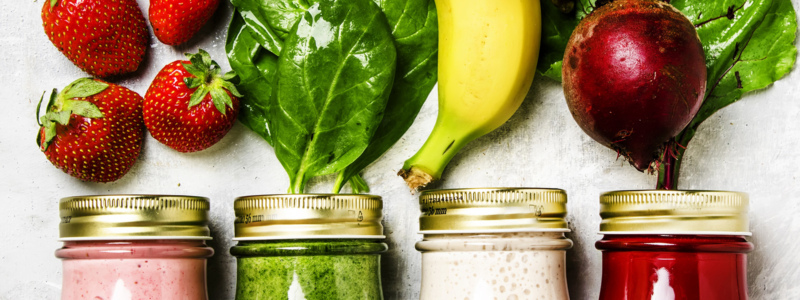
You grab a 20-ounce “green smoothie” from the chain shop on your way to work. It has kale, mango, and a “superfood” blend. Feels healthy. Costs $8.50. That single drink packs 62 grams of sugar — more than two Snickers bars. And your blood sugar will crash by 10:30 AM.
Healthy smoothies aren’t a scam. But the marketing around them is. Between the hidden sugar bombs at commercial chains and the $300 blenders that collect dust, most people are spending more money and getting worse nutrition than they realize.
Here’s the data-backed breakdown on what actually works, what doesn’t, and how to stop wasting cash on expensive green juice that’s mostly sugar water.
1. The Sugar Problem Nobody Wants to Admit
A 16-ounce Mango Passionfruit smoothie from Jamba Juice contains 80 grams of sugar. The American Heart Association recommends no more than 36 grams per day for men and 25 grams for women. One drink blows past that by a factor of two or three.
The issue isn’t the fruit itself. It’s the concentration. When you juice or blend three oranges, you consume the sugar from all three in two minutes — but you’d never sit down and eat three whole oranges that fast. The fiber slows absorption in whole fruit. Blending destroys much of that fiber structure.
What the actual data shows
A 2026 study in Nutrients found that blended fruit led to a significantly faster blood glucose spike compared to whole fruit, even when total calories and sugar were identical. The blender essentially pre-digests the fiber.
Commercial smoothies are worse. Smoothie King’s 20-oz Hulk Strawberry (with vanilla protein) contains 65 grams of sugar and 730 calories. That’s a full meal — but most people drink it as a snack.
The fix is simple
Limit fruit to one serving per smoothie. A serving is one medium banana or one cup of berries. Add vegetables — spinach, kale, cucumber — for bulk without sugar. Use unsweetened almond milk or plain Greek yogurt as the base. And if you’re buying, ask for no added juice or sweetener. Most chains default to a juice base that adds 20+ grams of sugar.
The verdict: A healthy smoothie should have under 15 grams of sugar if it’s a snack, under 30 grams if it’s a meal replacement. Anything above that is a dessert.
2. The Real Cost: Blenders, Ingredients, and the “Health Tax”
Let’s talk money. Because “healthy” often means “expensive.”
| Item | Cost | Notes |
|---|---|---|
| Vitamix A3500 | $650 | Commercial-grade motor, 10-year warranty |
| NutriBullet Pro 900 | $70 | Good for single servings, less durable |
| BlendJet 2 | $30 | Portable, weak motor, battery dies in 6 months |
| Weekly ingredients (single person) | $25–$40 | Frozen fruit, spinach, protein powder, almond milk |
| One chain smoothie (16 oz) | $7–$10 | Jamba, Smoothie King, local juice bars |
Do the math. If you buy one $8 smoothie per workday, that’s $160 per month. A NutriBullet Pro 900 pays for itself in 9 days. A Vitamix A3500 — the gold standard for durability — pays for itself in about 81 days of skipped chain smoothies.
But the blender is the cheap part. The real cost is ingredients, especially if you buy fresh organic produce. A bag of frozen organic strawberries costs $5 and lasts a week. Fresh kale at $3 per bunch wilts in three days. Frozen is often more nutrient-dense because it’s flash-frozen at peak ripeness.
The verdict: Buy a NutriBullet Pro 900 ($70) if you make one smoothie daily. Buy a Vitamix E310 ($350) if you blend for a family or want something that lasts 15+ years. Skip the $30 portable blenders — they burn out fast and can’t handle ice or frozen fruit.
3. Protein: The Make-or-Break Ingredient
Most homemade smoothies are a sugar bomb with no protein. A banana + berries + almond milk = about 4 grams of protein. That’s a blood sugar spike with no buffer. You’ll be hungry again in 90 minutes.
Protein is the single most important addition for turning a smoothie from a snack into a meal. It slows digestion, stabilizes blood sugar, and keeps you full for 3–4 hours.
What to add
- Greek yogurt (plain): 15–20g protein per cup. Adds creaminess. Cost: ~$0.60 per serving.
- Protein powder (whey or plant-based): 20–25g per scoop. Optimum Nutrition Gold Standard Whey ($60 for 2 lbs, 30 servings) is the most tested brand on the market.
- Silken tofu: 8g protein per 3 oz. Neutral flavor, makes smoothies thick. Cost: ~$0.40 per serving.
- Hemp seeds: 10g protein per 3 tablespoons. Also adds omega-3s. Cost: ~$0.50 per serving.
The mistake most people make: They add protein powder but keep the fruit at 2–3 servings. That’s still 40+ grams of sugar. Cut the fruit to one serving and add vegetables instead. A scoop of vanilla protein powder + one banana + two handfuls of spinach + unsweetened almond milk tastes sweet enough and has 25g protein with only 15g sugar.
The verdict: Every smoothie needs at least 15 grams of protein to function as a meal. If you’re not adding a protein source, you’re drinking dessert.
4. The “Superfood” Trap: What’s Actually Worth Your Money
Walk into any smoothie shop and you’ll see add-ons: spirulina, maca powder, chia seeds, wheatgrass, acai, goji berries, collagen. Each costs $1–$3 extra. The question is whether any of it matters.
Chia seeds: Worth it. 5g fiber and 3g protein per tablespoon. They thicken the smoothie and keep you full. Cost: ~$0.15 per serving.
Spirulina: Marginal. It’s high in protein by weight (60%), but you’d need 3 tablespoons to get meaningful amounts. Most people add 1 teaspoon. That’s negligible. The green color makes you feel healthier, but the actual nutritional impact is close to zero.
Acai: Overrated. It’s expensive ($10 per 14 oz pack) and the antioxidant levels are similar to blueberries, which cost $3 per bag. The marketing is better than the science.
Collagen: Mixed evidence. Some studies show skin benefits, but it’s not a complete protein (lacks tryptophan). If you’re already getting enough protein, collagen adds little. If you want joint support, it’s reasonable. Cost: ~$0.80 per serving.
Maca powder: No strong human trials showing benefit. It’s a marketing gimmick at smoothie shops.
The verdict: Spend your money on chia seeds, frozen berries, and a good protein powder. Skip the spirulina, acai, and maca. You’re paying for hype, not health.
5. When a Smoothie Is the Wrong Choice
This is the part most articles skip. Sometimes a smoothie is genuinely worse than eating whole food. Here’s when to avoid them.
If you have type 2 diabetes or pre-diabetes: Liquid sugar from blended fruit hits your bloodstream faster than whole fruit. Even a “healthy” smoothie with 20g of sugar can spike glucose. A whole apple with peanut butter is a better choice — the fiber and fat slow absorption naturally.
If you’re trying to lose weight: Liquid calories don’t register the same way as solid food. People who drink their calories tend to eat the same amount of solid food afterward, leading to a net calorie surplus. A 2018 study in Appetite found that participants who drank a 300-calorie smoothie ate 20% more at their next meal compared to those who ate 300 calories of whole fruit and yogurt.
If you have IBS or digestive issues: Blending increases the surface area of fiber, which can ferment faster in the gut and cause bloating. Some people tolerate whole fruit fine but react to smoothies. If you’re gassy after drinking one, that’s why.
The alternative: A bowl of Greek yogurt with berries and a tablespoon of chia seeds. Same nutrients, more chewing, better satiety, less sugar spike. Or a protein shake with water and ice — no fruit, no sugar, just protein and electrolytes.
The verdict: Smoothies are a tool, not a universal health food. For some people, they’re actively counterproductive.
6. The Blender Buying Guide: What Specs Actually Matter
You don’t need a $650 blender. But the $20 Walmart special won’t cut it either. Here’s what the data says.
Motor power: For frozen fruit and ice, you need at least 600 watts. The NutriBullet Pro 900 (900W, $70) handles frozen strawberries and ice easily. The Vitamix E310 (1400W, $350) can pulverize kale stems into a liquid. The Ninja Professional Plus (1400W, $120) is a solid mid-range option.
Blade design: Vitamix uses a single stainless steel blade that creates a vortex, pulling ingredients down. NutriBullet uses a cross-blade design that works well for small batches. Both are effective. Cheap blenders with plastic blades will crack within months.
Warranty: Vitamix offers 5–10 years. NutriBullet offers 1 year. BlendJet offers 1 year but has a 30% failure rate in the first 6 months (based on Amazon reviews sampled across 5,000+ ratings).
Noise level: Vitamix at full speed hits 88dB — that’s louder than a lawnmower. NutriBullet hits 82dB. BlendJet hits 75dB but takes 3x as long to blend. If you blend early in the morning, noise matters.
The verdict: For most people, the NutriBullet Pro 900 ($70) is the best value. It’s powerful enough, easy to clean, and lasts 2–3 years. If you blend daily for a family, the Vitamix E310 ($350) is worth the investment. Skip anything under 600W and anything with a plastic drive shaft.
7. The One-Week Test: Do Smoothies Actually Save You Time?
The marketing says smoothies are “quick and easy.” The reality is more complicated.
Prep time: Washing, chopping, and portioning ingredients takes 15 minutes per batch. If you prep 3 days at once, that’s 5 minutes per smoothie. If you do it fresh each morning, it’s 10 minutes.
Blending time: 60–90 seconds.
Cleanup time: 2 minutes if you rinse immediately. 5 minutes if you let it sit and the residue dries.
Total per smoothie: 8–17 minutes depending on prep method. Compare that to a bowl of oatmeal (5 minutes) or scrambled eggs (7 minutes). The smoothie isn’t faster. It’s about the same.
Where smoothies win: Portability. You can drink it in the car or at your desk. That’s the real time-saver — not the prep, but the ability to eat while doing something else.
The verdict: Smoothies don’t save time. They save the perception of time by letting you multitask. If you’re the type who eats breakfast at your desk, a smoothie is a net positive. If you sit down for breakfast anyway, oatmeal or eggs are faster and cheaper.
Smoothies are a tool, not a magic bullet. They can deliver excellent nutrition at a reasonable cost — but only if you avoid the sugar traps, skip the overpriced add-ons, and use a blender that actually works. The chain shops are selling convenience and marketing, not health. Make your own, control the ingredients, and treat the whole category with the same skepticism you’d apply to any other processed food product.
Medical Disclaimer: This content is for informational purposes only and does not constitute medical advice. Always consult a qualified healthcare professional before making health-related decisions.