

Not all meditation techniques train the same thing. Picking one at random — which is how most people start — explains most of the frustration that gets blamed on lack of discipline or the wrong personality type for meditation.
Below is a direct comparison of five techniques, honest takes on the major apps, and a clear recommendation for where to start based on your actual situation.
This is not a substitute for mental health care. If you have a trauma history or are managing a serious mental health condition, consult a licensed therapist before starting an intensive meditation practice.
The Biggest Myth That Kills Most Meditation Practices
The goal is not to empty your mind. This misconception ends more practices than lack of time, uncomfortable postures, or confusing instructions combined.
What meditation actually trains is attention. When your mind wanders — and it will, within the first 30 seconds — and you notice it has wandered, that moment of noticing is the practice. The thought is not the failure. Catching the thought and returning your focus is the rep. You do not fail at meditation by having thoughts. You fail by quitting because of them.
What “mindfulness” actually means versus what it is marketed as
Mindfulness has a specific clinical definition: deliberately paying attention to the present moment, without judgment. Jon Kabat-Zinn formalized this in 1979 through his Mindfulness-Based Stress Reduction (MBSR) program at UMass Medical Center. The original protocol ran 8 weeks at 45 minutes per day. The gap between what MBSR actually tested and what most apps are selling you is worth understanding before you spend any money.
What the research shows when protocols are followed correctly: measurable cortisol reductions after 8 weeks, significant drops in self-reported anxiety, and — in Sara Lazar’s Harvard research — increased gray matter density in brain regions tied to attention regulation and body awareness. None of these changes appeared in studies that used casual or inconsistent practice. Consistent is the operative word in every meaningful finding.
The minimum effective dose
You do not need 45 minutes daily to see results. Studies consistently show 10–15 minutes per day for 8 weeks produces clinically meaningful reductions in stress and anxiety. Below 8 minutes per session, the evidence becomes thin and inconsistent. That 8-minute floor matters — if your sessions are 4 minutes occasionally, you are below the threshold where structural changes are likely.
Starting with 10 minutes daily and actually doing it builds more benefit than planning ambitious 30-minute sessions you will skip most of the time.
Five Meditation Techniques Compared
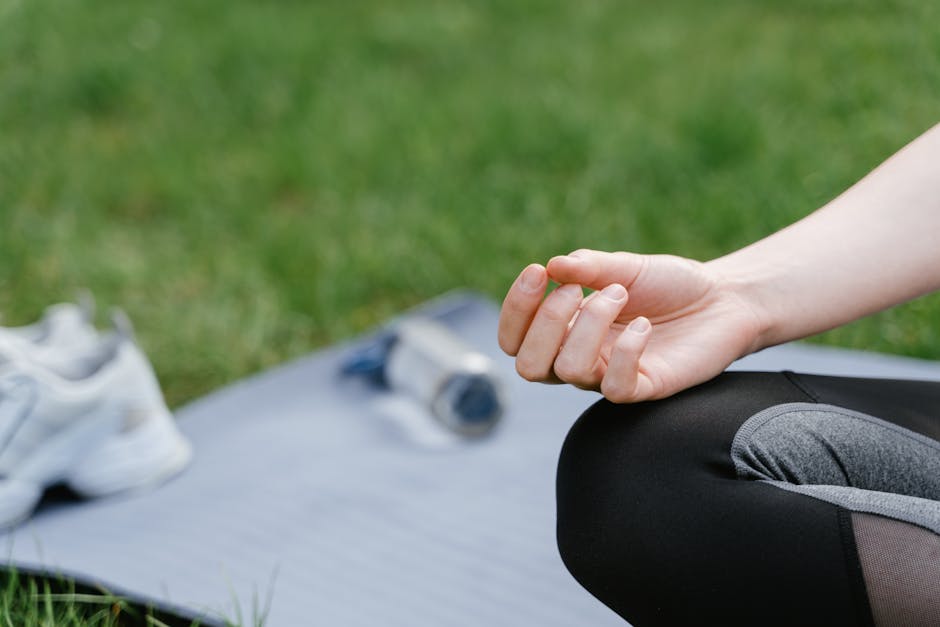
These techniques are not interchangeable. Each trains something slightly different, and each suits different goals and starting conditions. Understanding this distinction prevents the two-week frustration cycle that ends with “meditation does not work for me.”
| Technique | Primary Training Focus | Best Starting Point For | Session Length to Start | Beginner Difficulty |
|---|---|---|---|---|
| Breath Awareness | Sustained attention on breath sensation | Focus, general stress, most beginners | 10 minutes | Low |
| Body Scan | Sequential attention through body regions | Anxiety, insomnia, chronic muscle tension | 20–30 minutes | Low–Medium |
| Loving-Kindness (Metta) | Compassion phrases directed at self and others | Self-criticism, relationship stress, depression | 10–15 minutes | Medium |
| Open Monitoring (Vipassana-style) | Observing thoughts without attaching to them | Practitioners with 60+ hours of foundation practice | 20+ minutes | High |
| Walking Meditation | Awareness of movement sensations | High-anxiety beginners, restless individuals | 10–20 minutes | Low |
For most beginners, breath awareness is the right starting point. It has the strongest research support, the lowest barrier to entry, and the core skill — returning wandering attention — transfers directly to every other technique. Start here unless one of the specific exceptions below applies.
Loving-kindness and open monitoring are legitimate but work better as intermediate practices. Jumping into either without foundational attention training tends to produce frustration rather than the insight they are designed to develop.
Bottom Line: Default to breath awareness. Use body scan if sleep or anxiety is your primary problem. Use walking meditation if sitting still consistently makes symptoms worse, not better.
Breath Awareness: What to Actually Do in Your First Ten Sessions
Most apps teach breath awareness in a way that builds dependency on guided audio rather than an independent practice. The actual technique is simple enough to run without headphones after three sessions.
Sit in a chair or on the floor with your back relatively upright — not rigid, just not slumped. Close your eyes or lower your gaze to the floor a few feet ahead. Set a timer for 10 minutes so you are not monitoring the clock.
Pick one anchor point: the sensation of air passing through your nostrils, the rise and fall of your chest, or the expansion of your belly. Pick one and hold it. Do not switch mid-session based on what feels more interesting at the time.
Your mind will wander within 30 seconds. That is expected. When you notice it has wandered, return to the anchor without commentary or self-criticism. That complete loop — wandering, noticing, returning — is the entire practice. No special breathing pattern. No specific posture philosophy. No mantra.
Box breathing for overactive minds
If natural breath is not enough structure to anchor a very active mind, box breathing occupies the analytical part of the brain by giving it a counting task. Inhale for 4 counts. Hold for 4 counts. Exhale for 4 counts. Hold for 4 counts. Repeat.
The US Navy SEAL program uses this protocol for acute stress management — pre-mission anxiety, high-pressure decision moments. The counting makes it structurally harder for anxious thought spirals to dominate. Box breathing is a useful training wheel, not a destination. Once you can sustain 10 minutes on natural breath, you probably do not need it anymore.
4-7-8 breathing if sleep is the main goal
Andrew Weil’s 4-7-8 pattern — inhale 4 counts, hold 7, exhale 8 — produces a stronger parasympathetic response than box breathing because exhale duration is the primary driver of the relaxation response. Insomnia researchers have used extended-exhale protocols in clinical sleep treatment. If your reason for starting meditation is specifically sleep quality, test this variation over box breathing for two weeks before deciding which works better for you.
When to expect results
A brief sense of slowing down — lower heart rate, slightly reduced mental noise — often appears within the first session. That is the relaxation response, and it is real. The changes that persist outside sessions — anxiety that stays lower throughout the day, faster emotional recovery, better sustained attention at work — typically emerge after 6–8 weeks of consistent daily practice.
The first two weeks usually feel like effort with minimal payoff. That is the normal learning curve, not a signal to switch techniques or conclude the practice is not working. Switching techniques at week two is one of the most reliable ways people spend years not actually meditating.
Meditation Apps: An Honest Breakdown of What You Are Paying For
Is Headspace worth $69.99 per year?
For complete beginners: yes, but only for the first three months. Headspace’s Foundations course is genuinely well-structured, and Andy Puddicombe’s instruction style is calm without being condescending. The animated explanations help people who have never encountered these concepts before. After 90 days, though, most users are not building new skills — they are consuming guided audio that removes the need to develop an independent practice. That is a feature of the business model, and it is worth accounting for when you evaluate long-term value.
Waking Up versus Calm — not the same product
Waking Up ($14.99/month or $99.99/year), Sam Harris’s app, is the only major platform built around meditation theory rather than relaxation content. Harris draws a distinction between concentration practice — training sustained attention — and insight practice, which changes your relationship to the experience of being conscious. The app is more demanding than Headspace, skews toward users who want to understand the mechanics, and offers a free access program for anyone who cannot afford the subscription.
Calm ($69.99/year) does almost nothing that Headspace does not. Its Sleep Stories feature — celebrity narrations designed to ease you toward sleep — are popular, but that is not meditation. For building an actual practice, Calm is the weakest of the major paid apps. If sleep-focused audio content is specifically what you want, it is fine. Otherwise, skip it.
When Insight Timer is the right answer
Insight Timer is free. It has over 200,000 guided meditations across every tradition, from Theravada to secular neuroscience-based approaches. Quality varies significantly — excellent content exists alongside actively unhelpful content — but no paid app matches its breadth. If you have 60+ hours of existing practice and just want a timer with occasional guidance, Insight Timer is the correct choice. For beginners who need a clear progression, the volume is overwhelming rather than useful.
10% Happier ($99.99/year), built around Dan Harris’s book, sits between Waking Up and Headspace in approach — more theoretically grounded than Headspace, more accessible than Waking Up. Their teaching roster includes Joseph Goldstein and Sharon Salzberg, practitioners with decades of both personal practice and teaching experience. If you have completed Headspace Foundations and want more depth without jumping to Waking Up, this is the logical next step.
Bottom Line: Use Headspace Foundations to start. Move to Waking Up or 10% Happier once you have 60+ hours. Use Insight Timer’s free tier for supplementary content at any point.
Why Most Beginners Quit at Week Two
They are measuring how peaceful sessions feel instead of watching for changes between them. Meditation’s effects show up in how you respond to a frustrating email on a Wednesday afternoon — not in whether Tuesday morning’s session felt profound. If you are only tracking the session experience, you are measuring the wrong thing and will quit before the benefits become visible.
Body Scan and Walking Meditation: Two Specific Tools for Specific Situations
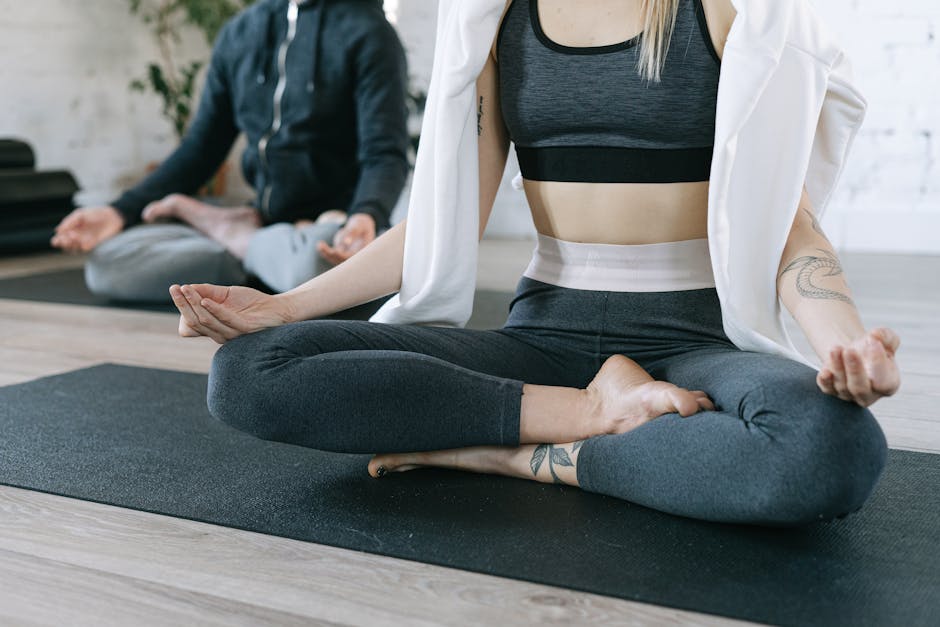
These are not fallback options for people who failed at breath awareness. They are the right primary technique for specific situations where seated breath practice is genuinely the wrong choice.
Body scan for anxiety and chronic sleep problems
A body scan moves attention slowly and sequentially through the body — toes to scalp, or scalp to toes — noticing sensation without trying to change anything. The original MBSR protocol uses 45-minute body scans as the core practice for its first two weeks specifically because building interoceptive awareness creates a foundation before asking practitioners to observe their own thoughts.
For anxiety: the body scan interrupts the thought-loop to physical tension to more thought-loop cycle by anchoring attention in sensation rather than cognition. Research on Generalized Anxiety Disorder has found body scan-based interventions produce symptom reductions comparable to cognitive behavioral therapy in some study populations — a stronger claim than most meditation research supports, so .
For sleep: a 20-minute body scan before sleep reduces sleep onset time more consistently than breath-focused practice in insomnia research. The mechanism is direct — muscles progressively release tension as attention passes through them, independent of any meditative insight. This works even for people who fall asleep before finishing the full scan.
Walking meditation for when sitting still makes things worse
Walking meditation is a distinct practice, not a compromise for restless people. The anchor becomes the sensations of walking — the pressure of each foot against the ground, the movement of your legs, the shift of weight from heel to toe. Whenever attention wanders, you return to these sensations. Structurally identical to breath awareness, different anchor.
For people with high baseline anxiety or those who have found sitting practice worsens rather than reduces symptoms in the first two weeks, the movement gives the nervous system something to process. Outdoor settings add a secondary benefit: natural environments independently reduce cortisol through mechanisms separate from the meditation itself.
Start at 10 minutes at a pace slower than your natural walking speed. A 2019 review published in Frontiers in Psychology found consistent anxiety and depression reductions from mindful walking protocols over 8–12 weeks, with effect sizes comparable to seated practice in most comparisons.
The person three minutes into their first session, wondering if they were doing it wrong — they were not broken. The wondering is part of the practice. You notice it. You return. That is the whole thing, and it works if you give it the time it needs.
Medical Disclaimer: This content is for informational purposes only and does not constitute medical advice. Always consult a qualified healthcare professional before making health-related decisions.