

Granola has a health halo problem. Most boxes market it as a wholesome breakfast while packing 12–20 grams of added sugar per serving — before you’ve added fruit, milk, or yogurt. Here’s how to use granola the right way, which brands are actually worth buying, and what combinations will keep you full past 10 a.m.
The Calorie Math Most Granola Eaters Get Wrong
A standard serving of granola is half a cup — about 50 grams. Most people pour closer to a full cup without thinking. That doubles the calories, the sugar, and the carbs in one unconscious motion.
Granola is calorie-dense by design. Oats, nuts, seeds, and oils are all high-energy foods. A full cup of a mid-range commercial granola can clock in at 450–550 calories and 24–30g of sugar before you’ve added a single thing. That’s not a light breakfast — that’s close to a full meal’s worth of calories from one bowl.
The fix is simple: measure your portion for two weeks until your eye is calibrated. Half a cup (50g) is the right baseline for most adults. A quarter cup works as a topping over yogurt or cottage cheese.
What the Granola Label Actually Tells You
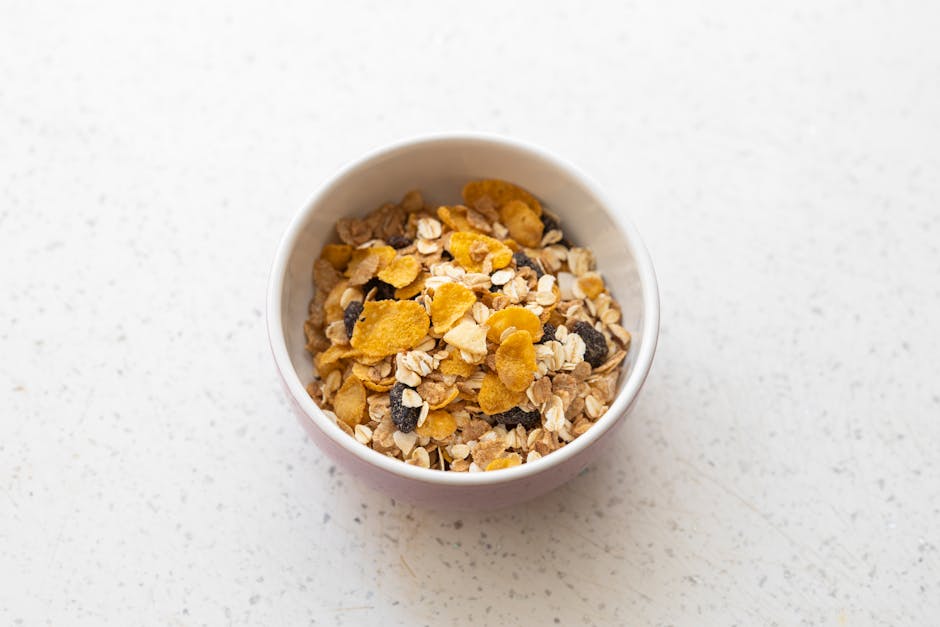
Before any brand recommendation, you need to know what you’re reading on the box. Four numbers matter. Everything else is marketing.
| Label Field | What to Look For | Red Flag |
|---|---|---|
| Serving Size | 1/4 to 1/2 cup (30–50g) | Under 30g inflates the appearance of low calories |
| Added Sugar | Under 6g per serving | Over 12g — effectively a granola bar in disguise |
| Protein | 5g or more per serving | Under 3g means hunger returns by 9:30 a.m. |
| Fiber | 3g or more per serving | Under 2g suggests refined oats or cheap fillers |
| First 3 Ingredients | Whole oats, nuts, seeds | Sugar or syrup listed before any whole food |
The ingredient order trick that takes 10 seconds
Ingredients are listed by weight from highest to lowest. If brown rice syrup or cane sugar appears before almonds or pumpkin seeds, the granola is sweetener-forward. That doesn’t make it automatically bad, but it means you’re paying health-food prices for a dessert product.
Why the front-of-box claims mean nothing
The FDA doesn’t define “low sugar” for labeling purposes. A brand can print it with 9g of added sugar per serving and be completely within legal bounds. Skip the front panel entirely and go straight to the Nutrition Facts. The “Added Sugars” line — required on labels since 2026 — is the number that matters.
One credible shortcut: if the ingredients list dates as a sweetener, the sugar is unrefined and comes with fiber. It still shows up in the total sugar count, but the blood sugar response is slower than refined cane sugar. Purely Elizabeth uses this approach consistently across its lineup.
What to know about the fat source
Most granolas bind with canola oil, sunflower oil, or coconut oil. Coconut oil adds saturated fat, which some people track for cardiovascular reasons. Sunflower or canola oil are more neutral choices. Not a dealbreaker either way — but worth knowing if granola is a daily habit and the rest of your diet already skews high in saturated fat.
Five Granola Breakfast Combinations That Actually Keep You Full
Granola alone is not a complete breakfast. The combinations below pair granola’s carbohydrates with enough protein and fat to slow digestion and prevent the mid-morning crash that sends people toward vending machines.
- Greek yogurt + granola + berries. Use 3/4 cup plain Greek yogurt (17g protein), 1/4 cup granola, and a handful of blueberries or sliced strawberries. Total: roughly 330–360 calories and 20g protein. This is the daily driver for most people — assembled in under 90 seconds.
- Granola + almond milk + chia seeds. Eat it like cereal with a slow-burn twist. Add 1 tablespoon of chia seeds to 1/2 cup granola and 1 cup unsweetened almond milk. Wait five minutes before eating — the chia seeds absorb liquid, expand, and add 5g of fiber plus 3g of omega-3-rich fat. More filling than it looks.
- Cottage cheese + granola + stone fruit. Sounds unexpected. Works very well. Half a cup of low-fat cottage cheese (14g protein), 3 tablespoons granola for crunch, and half a sliced peach or nectarine. Higher protein than the yogurt version — the better option on days that include resistance training.
- Parfait layered with nut butter. Layer 1/2 cup yogurt, 2 tablespoons granola, and 1 teaspoon almond butter, then repeat. The nut butter adds 3–4g of protein and slows digestion. Justin’s Classic Almond Butter single-serve packets (around $1.50 each) are ideal for office assembly.
- Overnight oat-granola hybrid. Combine 1/3 cup rolled oats, 2 tablespoons granola, 1 cup milk, and 1 tablespoon flaxseed in a jar. Refrigerate overnight. The granola adds crunch and natural sweetness without stirring in extra sugar. This is the highest-fiber option on the list at 8–10g per serving — make five jars Sunday night and pull one each morning.
The smoothie bowl warning
Granola works as a smoothie bowl topping, but the combined sugar load is easy to blow past. A bowl with banana, frozen mango, honey, and sweetened granola can hit 60–70g of sugar. Pick one sweet element — the fruit or the sweetened granola, not both. Or use one to two tablespoons of a lower-sugar option like Bear Naked Fit strictly as a textural garnish.
The Best Store-Bought Granola Brands Right Now
Purely Elizabeth Original Granola ($10–12 for 12 oz) is the top pick for most people. It uses coconut sugar and quinoa puffs, delivers 5g protein and 3g fiber per 1/3-cup serving, and keeps added sugar at 6g. The texture is chunky without being rock-hard. It costs more than supermarket brands, but it’s the most nutritionally honest product in the premium tier.
| Brand | Added Sugar | Protein | Fiber | Price | Best For |
|---|---|---|---|---|---|
| Purely Elizabeth Original | 6g | 5g | 3g | $10–12 / 12oz | Daily use, clean eating |
| Kind Breakfast Protein Granola | 7g | 10g | 4g | $7–9 / 11oz | Post-workout, high protein days |
| Bob’s Red Mill Classic Granola | 12g | 5g | 3g | $7–8 / 12oz | Budget option, baking topping |
| Bear Naked Fit Triple Berry | 5g | 4g | 3g | $6–7 / 12oz | Lowest added sugar priority |
| Nature Valley Protein Granola | 9g | 10g | 3g | $5–6 / 11oz | Budget-friendly high protein |
| Cascadian Farm Organic Granola | 11g | 4g | 3g | $6–8 / 16oz | Organic priority, value size |
Best for weight management
Bear Naked Fit Triple Berry at 5g added sugar per 1/3 cup is the right call when minimizing sugar is the primary goal. Protein runs low at 4g, so pair it with Greek yogurt to complete the meal. At $6–7 for 12 oz, it lands in the mid-budget range and is available at most major grocery chains.
Best for people who train regularly
Kind Breakfast Protein Granola at 10g protein per 1/3 cup leads the category by a wide margin. The 7g of added sugar is a reasonable tradeoff for athletes who train in the morning and need carbohydrate replenishment. Pair it with cottage cheese for a breakfast that clears 24g of protein without adding a powder.
How to Make Granola at Home for About $2 a Batch
Store-bought granola at $10–12 for 12 oz adds up fast if you’re eating it five days a week. Homemade granola costs $2–3 per batch — roughly 50 cents per serving — and takes about 25 minutes of actual hands-on effort. This recipe produces 4 cups, or 8 servings at half a cup each.
Ingredients:
- 3 cups old-fashioned rolled oats — not quick oats (Bob’s Red Mill Old Fashioned Rolled Oats, $4 for 32 oz)
- 1 cup raw mixed nuts — almonds, cashews, and pepitas work well together
- 3 tablespoons coconut oil, melted
- 3 tablespoons pure maple syrup, Grade A dark amber
- 1/2 teaspoon kosher salt
- 1 teaspoon vanilla extract
- Optional: 1/2 cup dried cherries or cranberries, added after baking
Steps:
- Preheat oven to 325°F (163°C). Line a large baking sheet with parchment paper.
- Combine oats and nuts in a large mixing bowl.
- Whisk together melted coconut oil, maple syrup, salt, and vanilla in a separate bowl.
- Pour liquid over oats and nuts. Stir until every piece is evenly coated.
- Spread in a single, even layer on the baking sheet. Press down firmly with the back of a spatula — this is what creates clusters.
- Bake 20–22 minutes. Do not stir. Check edges at the 20-minute mark. Golden brown means pull it out now.
- Let cool completely on the pan — at least 25 minutes — before breaking into clusters. The center will look soft; it crisps as it cools.
The one mistake that ruins every batch
Stirring during baking. When you stir, you break the clusters forming at the edges and push wet oats into those spots. Set it and walk away. If the center looks underdone at 20 minutes, that is correct — residual heat and the cooling process finish the job. Stirring turns what should be chunky granola into dry, crumbly oat cereal.
Boosting the protein in homemade granola
Add 2 tablespoons of hemp seeds and 1/4 cup of additional pepitas before baking. This contributes roughly 2–3g of extra protein per 1/3-cup serving without changing the bake time or texture. For a larger protein increase, fold in 2 tablespoons of unflavored pea protein powder after the granola has cooled completely — adding it before baking produces a chalky, powdery texture.
Storage: airtight container at room temperature for up to 3 weeks. Alternatively, freeze in zip-lock bags and pull servings as needed — granola thaws in about 10 minutes at room temperature, so there’s no reason to limit how much you make at once.
When Granola Is the Wrong Breakfast Choice
Is granola appropriate if blood sugar is already a concern?
Not as the centerpiece. Even low-sugar granola is a moderate-to-high glycemic food. If you’re managing prediabetes or insulin resistance, a breakfast built around eggs, avocado, and non-starchy vegetables will serve you better. Granola becomes workable as one to two tablespoons of topping over plain yogurt — just enough for texture and flavor without a meaningful carbohydrate load.
I keep eating two or three servings without realizing it — is granola the problem?
Granola is genuinely hard to portion by feel. A 1/4-cup serving looks small in almost any bowl. If the pattern repeats regardless of intent, switch to oatmeal as the base with a small scoop of granola on top for crunch. Bob’s Red Mill Steel Cut Oats ($5 for 24 oz) take longer to prepare and eat, digest more slowly, and are much harder to accidentally overeat. Use granola as a flavoring — not the main event.
Why am I still hungry 90 minutes after eating granola?
The granola is probably not the problem. Granola eaten with only milk is primarily carbohydrates — blood sugar rises quickly, then drops. Without a meaningful protein source alongside it, hunger returns fast. The fix: add at least 15g of protein from Greek yogurt, eggs, or cottage cheese before writing off granola entirely. The combinations listed earlier are built specifically to solve this problem.
Making Granola a Reliable Part of Your Morning
The reason most people don’t eat a healthy breakfast consistently isn’t lack of knowledge. It’s friction — the moment you face a decision at 7 a.m. while half-awake is the moment convenience food wins.
A granola breakfast can be ready in under 3 minutes if the setup is already done. The system that holds up over weeks: on Sunday, portion six servings of granola into individual small containers. Wash and dry berries. Store yogurt at the front of the fridge. Monday through Friday, you’re just stacking pre-measured ingredients — no choices required at 7 a.m.
For the overnight oat-granola hybrid, make five jars at once Sunday evening. Stack them in the fridge. Pull one out each morning. No thought needed.
One more factor worth tracking: eating within 60–90 minutes of waking tends to keep cortisol levels more stable and reduces how much you eat at lunch. A 350–400 calorie granola breakfast in that window — with adequate protein — consistently sets up the rest of the day better than skipping breakfast and hitting 900 calories at noon.
Start with Purely Elizabeth Original Granola layered over plain Greek yogurt with whatever fruit is in season. It’s the lowest-friction version of a genuinely healthy granola breakfast. Once that’s automatic, spend a Saturday morning making your own batch to cut costs and dial in the nutrition to match your actual goals.
Medical Disclaimer: This content is for informational purposes only and does not constitute medical advice. Always consult a qualified healthcare professional before making health-related decisions.