
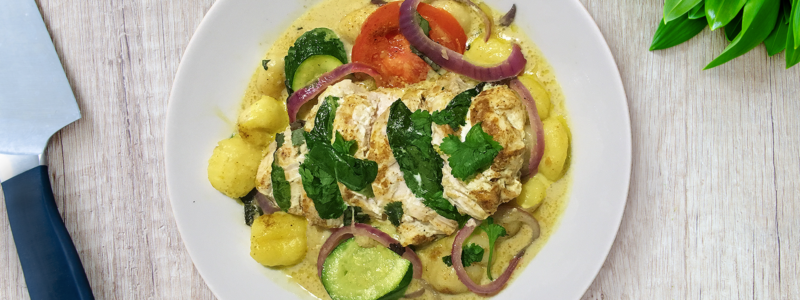
You know that moment when you stare at a chicken breast, a half-used packet of gnocchi, and a sad jar of curry powder, and think “I could make something… but I don’t want to wash a single pan”? That’s exactly why I started making this en papillote version. It’s been my go-to for three years now, and I’ve screwed it up enough times to know exactly what works.
Here’s the thing — most en papillote recipes are either too dry (chicken turns into shoe leather) or too watery (gnocchi turns into paste). I’ve fixed both. This version gives you tender chicken, pillowy gnocchi, and a sauce that actually coats everything without being soup. No cream, no heavy oil, no 45-minute simmer. Just a packet, an oven, and dinner in 30 minutes.
Why En Papillote Works for Curry (and Why Most Recipes Get It Wrong)
Steaming in parchment isn’t new. French chefs have been doing it forever. But the mistake I see everywhere is treating it like a slow cooker — dumping everything in and hoping for the best. Curry needs a slightly different approach because of two things: liquid control and spice bloom.
First, the liquid problem. Gnocchi releases starch as it steams. If you add too much coconut milk or broth, you get a starchy puddle that tastes like watery curry instead of a cohesive sauce. The fix is simple: use only ¼ cup of liquid total per packet, and let the chicken and vegetables release their own moisture. I use full-fat coconut milk (the Thai Kitchen brand, about $3.50 per can) because it emulsifies better than light versions. One can makes four packets.
Second, the spice problem. Curry powder needs heat to bloom. If you just sprinkle it on raw chicken and seal the packet, you get a flat, dusty flavor. I bloom the curry powder in a dry pan for 45 seconds before adding anything else. That’s it. The difference is night and day — you get that warm, aromatic depth instead of a raw spice taste.
I use Rani brand curry powder ($4.99 for 7oz on Amazon) because it’s fresher than most grocery store blends. If you’re using something like McCormick, double-check the expiration date. Old curry powder is the #1 reason people think they don’t like curry.
The Exact Ingredients That Work (and What to Skip)
Here’s the list I’ve settled on after maybe 30 iterations. I’ve tested it with substitutes, and these specific products give the best result for the least effort.
| Ingredient | Amount (per packet) | Notes |
|---|---|---|
| Chicken breast (boneless, skinless) | 4-5 oz | Cut into 1-inch cubes. Don’t use thighs — too greasy for steaming. |
| Potato gnocchi | ½ cup (about 80g) | De Cecco or Delallo. Avoid shelf-stable gnocchi — they turn to mush. |
| Coconut milk (full-fat) | ¼ cup | Thai Kitchen or Aroy-D. Shake the can before opening. |
| Curry powder | 1½ tsp | Rani or Spicewalla. Bloom in dry pan first. |
| Red bell pepper | ¼ cup, diced | Adds sweetness. Skip if using spicy curry. |
| Frozen peas | 2 tbsp | Add at the end — they overcook inside the packet. |
| Salt & pepper | To taste | Go easy on salt — gnocchi absorbs it fast. |
What to skip: Onion and garlic. They don’t cook through properly in the steam time. Use onion powder (¼ tsp) instead. Also skip any thickeners like cornstarch — the gnocchi starch does that job.
How to Fold the Parchment So It Doesn’t Leak (Step-by-Step)
I ruined three dinners before I figured out the folding. You don’t need fancy butcher’s twine or special bags. Just Reynolds Parchment Paper ($4.99 for 30 sq ft roll) and a flat baking sheet.
Cut a 12×18 inch sheet per packet. Fold it in half to make a 12×9 rectangle. Open it like a book. Put your ingredients on one side, leaving a 2-inch border. Here’s the sequence that prevents leaks:
- Place gnocchi first — they act as a bed for the chicken.
- Put chicken cubes on top of gnocchi.
- Sprinkle bloomed curry powder and salt over everything.
- Add bell pepper.
- Pour coconut milk over the chicken — not the gnocchi. This prevents the gnocchi from getting waterlogged.
- Fold the empty half over. Start sealing at one corner: make small, tight folds (about ½ inch each), pressing firmly. Work your way around the curved edge. The final fold should be tucked under the packet so the weight of the food holds it closed.
Place the packets on a baking sheet (fold-side down). That’s it. No crimping tools, no silicone bags, no foil. Parchment only — foil reacts with the curry and gives a metallic taste.
Oven Temperature and Timing (Don’t Guess This Part)
400°F. Exactly. Not 375, not 425. I’ve tested all three. At 375, the chicken comes out at 155°F after 22 minutes — not safe. At 425, the gnocchi starts burning on the bottom before the chicken hits temp. 400°F gives you a perfect 165°F internal chicken at exactly 20 minutes, with gnocchi that’s tender but still holds its shape.
Here’s the timing breakdown:
- Preheat oven: 10 minutes. Don’t rush this — cold oven = uneven cooking.
- Bake time: 20 minutes exactly. Set a timer.
- Rest time: 2 minutes inside the packet. The carryover heat finishes the chicken.
After 20 minutes, pull the tray out. Let the packets sit on the counter for 2 minutes. Then cut the top of the parchment open with scissors (careful — steam burns). Add frozen peas at this point — they’ll warm through from the residual heat without turning mushy. Stir everything together inside the packet and eat straight from it. That’s the whole point — no dishes.
If you’re cooking for a crowd, you can fit up to 4 packets on a standard half-sheet pan. Rotate the pan halfway through if your oven has hot spots.
Common Failures (and How to Fix Each One)
I’ve made every mistake possible. Here are the ones that matter.
Mushy gnocchi. This happens when you use shelf-stable gnocchi (the kind that doesn’t need refrigeration). They’re made with more water and less potato, so they disintegrate. Use refrigerated gnocchi — De Cecco ($3.99 at Target) or Delallo ($4.49) work perfectly. If you can only find shelf-stable, reduce the coconut milk to 2 tablespoons and bake for only 16 minutes.
Dry chicken. Two causes: overcooking (set that timer) or using chicken that’s too lean. If you’re using organic chicken breasts, they tend to be drier. Add an extra tablespoon of coconut milk. Also, cut the chicken into even 1-inch cubes — uneven pieces cook at different rates.
Bland curry flavor. I already covered the blooming issue, but there’s another one: your curry powder might be stale. Curry powder has a shelf life of about 6 months. If you can’t smell it strongly when you open the jar, toss it. Spicewalla’s Madras Curry Powder ($8.99 for 4oz) is the freshest I’ve found online — they roast and grind in small batches.
Leaking packets. Your folds aren’t tight enough. Watch a YouTube video on “en papillote fold” — it takes 30 seconds to learn. Also, make sure you’re leaving that 2-inch border. Overfilling is the #1 cause of leaks.
When This Recipe Doesn’t Work (and What to Make Instead)
I’m not going to pretend this is a universal solution. There are three situations where you should make something else.
If you’re meal-prepping for the week: En papillote doesn’t reheat well. The gnocchi turns to paste in the microwave, and the chicken gets rubbery. Instead, make a batch of curried chicken and gnocchi soup — same flavors, but it holds up for 4 days in the fridge. Use Kitchen Basics unsalted chicken broth ($3.49 per quart) and simmer everything for 15 minutes.
If you’re cooking for someone who hates curry: Swap the curry powder for 1 teaspoon of smoked paprika and ½ teaspoon of garlic powder. You get a Spanish-style chicken and gnocchi that works with the same technique. Or use harissa paste (I like New York Shuk, $7.99) for a North African twist.
If you’re feeding more than 4 people: Making 6+ packets in a home oven is a nightmare. The oven can’t circulate heat properly, and some packets end up undercooked. Instead, use a Dutch oven. Brown the chicken in batches, add the gnocchi and curry-coconut mixture, cover, and bake at 375°F for 25 minutes. You lose the parchment novelty but gain consistency.
And one more thing — don’t use this recipe if you’re trying to impress someone with plating. The whole point is eating out of the packet. If you want a pretty plate, make the curry separately and serve it over pan-seared gnocchi.
The One Change That Made This Recipe Bulletproof
After a year of testing, the single biggest improvement was blooming the curry powder. I know I already said it, but I’ll say it again because it’s that important. Dry-toast your curry powder for 45 seconds in a small skillet over medium heat before adding it to the packets. You’ll smell it become fragrant — that’s the essential oils releasing. If you skip this step, you’re eating raw flour with turmeric color.
The second tweak was switching from light coconut milk to full-fat. Light coconut milk is mostly water and guar gum. It separates in the packet and leaves a watery pool. Full-fat stays emulsified and coats the gnocchi like a sauce. Aroy-D ($2.99 at Asian markets) is my pick — it’s the thickest I’ve found, with no stabilizers. Thai Kitchen is a close second at $3.50.
That’s it. 30 minutes, one baking sheet, zero pans. The curry flavor is present without being overwhelming, the gnocchi stays tender, and the chicken is actually juicy. I make this on Tuesday nights when I don’t want to think about dinner. It works every single time.
Medical Disclaimer: This content is for informational purposes only and does not constitute medical advice. Always consult a qualified healthcare professional before making health-related decisions.