
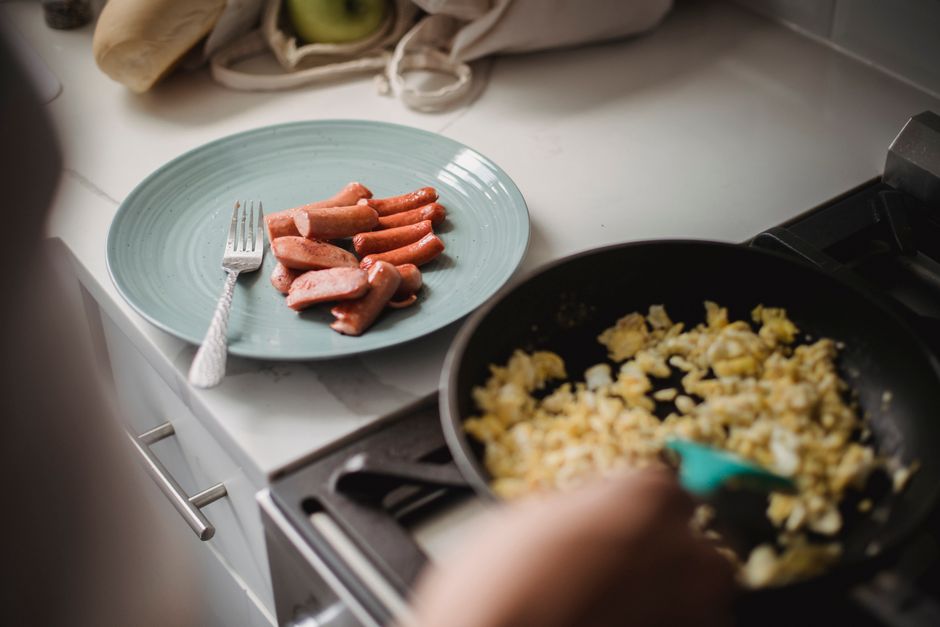
A breakfast that lasts until lunch needs more than a large protein number on the label. Protein, fiber, fat, food volume, and total calories all affect how long the meal holds you.
This is not legal advice — consult a licensed attorney.
Why protein alone does not keep breakfast filling
Protein slows hunger, but it is not the whole meal
Protein usually makes breakfast more satisfying because it takes longer to digest than many refined carbohydrates and helps preserve lean tissue during weight loss. For many adults, a breakfast with 25-35 grams of protein provides a stronger base than toast, fruit, or a small pastry alone. That number is a useful starting range, not a legal requirement or a universal prescription. A smaller person may need less, while an athlete, larger adult, or highly active worker may need more food overall.
The source matters less than the complete meal, but protein quality still affects the choice. Eggs, Greek yogurt, cottage cheese, tofu, milk, beans, and lean meats can all work. A protein bar can also help when time is short, yet a bar often lacks the volume and fiber found in a bowl of yogurt with fruit and oats.
Fiber, fat, and volume finish the job
Fiber adds bulk and slows the movement of food through the digestive system. Berries, apples, oats, chia seeds, vegetables, and beans make a breakfast feel larger without relying only on sugar or fat. A modest amount of fat from nut butter, avocado, seeds, or egg yolks can improve satisfaction as well. The strongest structure is usually protein plus a high-fiber carbohydrate plus produce, with enough total energy to match the morning ahead. If hunger returns at 10:30 every day, the problem may be a breakfast that is simply too small.
How to build a breakfast that lasts four hours

Start with a measurable protein anchor
Choose one main protein source before adding toppings. Two large eggs provide about 12 grams of protein, so eggs alone may not reach a useful breakfast target. Add 1 cup of plain Greek yogurt, cottage cheese, tofu, or a side of beans when needed. A practical bowl might contain 1 cup Greek yogurt, ½ cup oats, 1 tablespoon chia seeds, and ¾ cup berries. Depending on the brand and serving size, that combination can provide roughly 28-32 grams of protein and a substantial amount of fiber.
Use the three-part plate test
Build the meal with three parts:
- Protein: eggs, yogurt, cottage cheese, tofu, beans, milk, or lean meat.
- Slow carbohydrate: oats, whole-grain toast, potatoes, beans, or fruit.
- Produce or fiber booster: berries, an apple, vegetables, chia seeds, flaxseed, or lentils.
Then check the portion against your morning. Someone doing a long training session may need potatoes, oats, or two slices of whole-grain toast. Someone sitting at a desk may prefer one slice of toast and more vegetables. Do not cut carbohydrates automatically. They can support exercise and mental focus, especially when breakfast follows an overnight fast. The better rule is to choose a slower-digesting source and pair it with protein.
Why you feel hungry before lunch

The breakfast may be too light for the morning
Many people blame a lack of willpower when the real issue is an undersized meal. A breakfast of coffee and a small banana may provide useful nutrients, but it usually offers little protein and limited total energy. The same can happen with a low-calorie yogurt eaten without oats, fruit, or seeds. If you wake early, commute, exercise, care for children, or work on your feet, a 250-calorie breakfast may not carry you to noon. Hunger is information. It does not automatically mean the meal failed, but it does justify a portion review.
Liquid breakfasts can disappear quickly
Smoothies and shakes are convenient because they require little chewing. That convenience can also make it easy to drink a meal faster than you would eat it. A shake made with milk, protein powder, banana, and peanut butter can be balanced, yet some people still feel less satisfied than after a solid meal with similar calories. Add oats, frozen berries, or ground flaxseed if the drink leaves you hungry. If the problem continues, replace the shake with a bowl, sandwich, or egg-based meal for a week and compare your hunger.
Persistent hunger deserves a wider check
Unusual hunger alongside thirst, frequent urination, fatigue, unexplained weight change, or digestive symptoms should not be handled only by adding more protein. Sleep loss, medication effects, high training volume, blood-sugar problems, and other health issues can change appetite. A registered dietitian or clinician can assess the pattern more safely than a breakfast label can.
Which ready-made breakfast products are worth buying
Best yogurt and skyr options
Ready-made products can solve a real time problem, but their labels deserve inspection. Chobani Complete Greek Yogurt commonly provides 20 grams of protein per 5.3-ounce cup and often sells near $2.49. Oikos Pro typically provides 20 grams per 5.3-ounce cup at roughly $2.29. Siggi’s 0% plain skyr commonly provides about 15 grams per 5.3 ounces and often costs around $1.99. Prices vary by store and region, so treat these as typical U.S. shelf prices rather than fixed promises.
For a breakfast that must last until lunch, my pick is Chobani Complete when you want a higher protein number and a sweeter flavor, while plain Siggi’s is the better choice for controlling added sugar. Neither cup is a complete breakfast by itself for most adults. Add oats, berries, nuts, or whole-grain toast.
Best portable choices
For travel, an RXBAR Protein bar commonly provides 12 grams of protein for about $2.49, while KIND Protein bars often provide 12 grams for roughly $2.29. Premier Protein shakes usually provide 30 grams in an 11.5-ounce bottle and often cost close to $3.49. The clear portable winner is the Premier Protein shake when protein is the immediate problem. The better complete meal is a bar plus fruit and milk, because the extra food adds volume and nutrients. Check for allergies, sugar alcohols, and ingredients that upset your digestion before buying a full box.
Mistakes that make high-protein breakfasts fail

Common mistakes to avoid
- Counting protein but ignoring calories: A 20-gram yogurt may not provide enough food for a long morning.
- Choosing a sweet product as the whole meal: A flavored cup can work, but it often needs oats, fruit, or nuts beside it.
- Adding too much fat: Large spoonfuls of nut butter, cream, and oil can raise calories quickly without adding much volume.
- Skipping fiber: Protein cookies and shakes may be convenient but can leave the meal short on plant foods.
- Changing everything at once: Test one breakfast for several mornings so you can identify what affects hunger and digestion.
When not to buy a ready-made product
Do not buy a protein product simply because the front label says high protein. Skip it when the serving contains an ingredient you cannot tolerate, a price that makes regular use unrealistic, or a texture that leads you to eat two servings. People with kidney disease, diagnosed digestive conditions, food allergies, or a medically prescribed diet should ask their clinician or dietitian before making a large protein increase. For children, portion size and overall diet matter more than chasing an adult-style protein target. A simple egg, bean, or yogurt meal may be safer and cheaper than a heavily marketed snack.
A practical seven-day breakfast rotation
Prep once, then repeat the structure
A useful rotation does not require seven different recipes. Prepare hard-boiled eggs, overnight oats, roasted potatoes, washed fruit, or cooked tofu once, then combine them in different ways. The schedule below gives each breakfast a clear protein source and a realistic amount of preparation.
| Day | Breakfast | Approximate protein |
|---|---|---|
| Monday | Greek yogurt, oats, berries, and chia | 28-32 g |
| Tuesday | Two eggs, cottage cheese, whole-grain toast, and an apple | 27-32 g |
| Wednesday | Tofu scramble, black beans, and roasted potatoes | 25-30 g |
| Thursday | Overnight oats with milk, peanut butter, and banana | 25-30 g |
| Friday | Egg and bean breakfast burrito with salsa | 28-35 g |
| Saturday | Cottage cheese, berries, walnuts, and whole-grain toast | 25-30 g |
| Sunday | Protein shake, oatmeal, and a piece of fruit | 27-35 g |
The final verdict
For the best odds of staying full until lunch, start with 25-35 grams of protein, add a high-fiber carbohydrate, include fruit or vegetables, and size the meal for your actual morning. My overall winner is a Greek yogurt and oat bowl for speed, while eggs with beans and toast win when you want the most chewing and meal volume. Breakfast products can fill gaps, but the category is moving toward better combinations of protein, fiber, and convenience rather than higher protein numbers alone. That shift should make the next generation of quick breakfasts more useful for real mornings, not just better at advertising nutrition.
Medical Disclaimer: This content is for informational purposes only and does not constitute medical advice. Always consult a qualified healthcare professional before making health-related decisions.