
You shut the laptop, stand up, and feel the familiar pull: tight hips, stiff shoulders, a sore lower back, and wrists that feel tired from hours of typing. A long desk day can leave your body stuck in the same small range of motion, even if you did not feel much strain while sitting.
The best evening routine does not need a gym, special clothing, or a painful stretch. Use 12 minutes, move slowly, and stop short of sharp pain. The goal is to lower tension and restore comfortable movement before bed.
A 12-Minute Desk-Day Stretch Schedule
Follow this order because it moves from easy mobility into longer holds. Do not rush from a cold, rigid position into a deep stretch. The first few minutes should feel like a gradual reset.
| Time | Movement | Duration | Main target |
|---|---|---|---|
| 0:00–1:30 | Easy standing reach and side bends | 90 seconds | Breathing and ribs |
| 1:30–3:30 | Cat-cow on hands and knees | 2 minutes | Spine and shoulders |
| 3:30–5:30 | Half-kneeling hip flexor stretch | 1 minute per side | Front of the hips |
| 5:30–7:30 | Open-book rotation | 1 minute per side | Upper-back rotation |
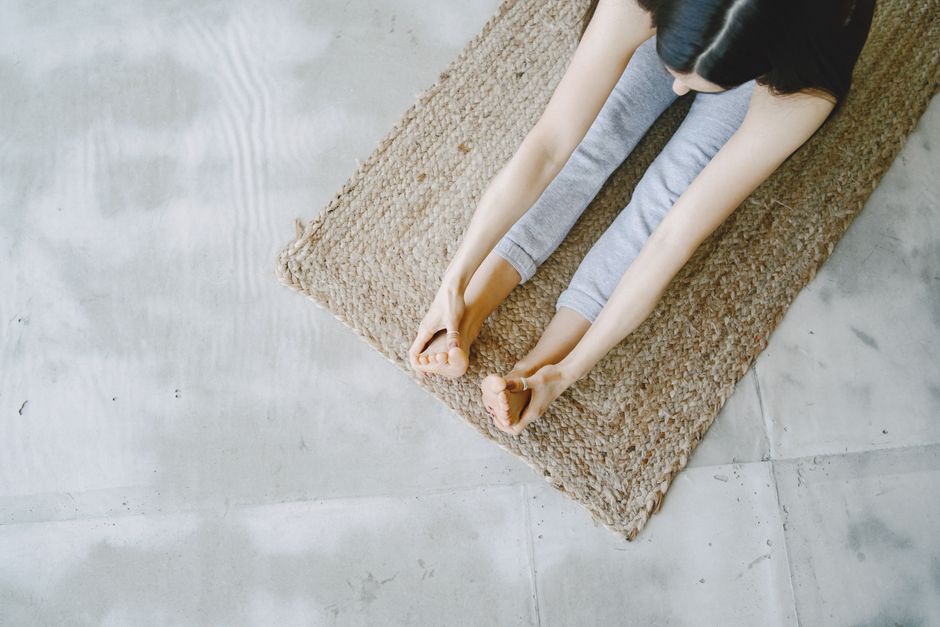
| 7:30–9:30 | Seated hamstring stretch | 1 minute per side | Back of the legs |
| 9:30–11:00 | Doorway chest stretch | 90 seconds | Chest and front shoulders |
| 11:00–12:00 | Wrist circles and quiet breathing | 1 minute | Hands and nervous system |
Keep the intensity low
Use smooth movements and leave two or three comfortable repetitions in reserve. You do not need to reach a dramatic end position. The useful signal is easier movement after the stretch, not a bigger sensation during it.
Repeat the schedule for two weeks
Try the routine five evenings per week for 14 days. Track only two things: how stiff you feel when you stand up from work and how freely you can rotate your upper body. If those measures do not improve, change the routine or ask a qualified clinician for help instead of pushing harder.
How to Perform the Routine Without Irritating Your Back
The safest approach is to treat every stretch as a moving check-in. Your body should feel more settled after each exercise, not more guarded.
- Start upright. Stand with your feet about hip-width apart. Let your arms hang for three breaths before reaching overhead.
- Warm the spine. During cat-cow, move one vertebra at a time and keep the motion small. Do not collapse into your lower back.
- Set the pelvis. In the half-kneeling hip stretch, tuck your tailbone slightly and squeeze the glute on the kneeling side. This keeps the stretch in the front of the hip.
- Rotate from the upper back. During the open-book movement, keep your knees stacked and let your ribs turn. Do not wrench your shoulder toward the floor.
- Hinge for the hamstrings. Sit tall and lean forward from your hips. A straight back matters more than touching your toes.
- Open the chest gently. Place your forearm on a doorway and turn away only until you feel a mild pull across the chest.
- Finish with the hands. Make slow wrist circles, spread your fingers, and shake out tension without squeezing the fists.
Use the two-minute rule
If a position still feels awkward after two minutes of easy practice, reduce the range or switch sides. Repeating a poor position will not teach your body to relax. The best stretch is the one you can perform with steady breathing and no protective bracing.
Know the difference between tension and warning signs
Muscle tension feels broad and manageable. Warning signs include sharp pain, electric sensations, numbness, sudden weakness, dizziness, or pain that keeps climbing after you stop. Those signals call for a pause, not a deeper stretch.
The Four Stretches That Matter Most After Screen Time
If you only have six minutes, choose the hip flexor stretch, open-book rotation, doorway chest stretch, and wrist sequence. Together, they address the positions most repeated during desk work: bent hips, rounded upper back, forward shoulders, and static hands.
Half-kneeling hip flexor stretch
Kneel with your right knee down and left foot forward. Place both hands on the front thigh, tuck your pelvis slightly, and shift forward until the front of the right hip feels open. Hold for 30 seconds, release, then repeat once before changing sides. Do not arch your back to create a bigger sensation. The glute on the kneeling side should stay active.
Open-book rotation
Lie on your side with knees bent and arms straight in front of you. Keep your knees together while you sweep the top arm across your body and toward the floor behind you. Follow the hand with your eyes, breathe out, and return slowly. Complete six controlled repetitions per side. This targets upper-back rotation without demanding a large twist from the lower back.
Doorway chest stretch
Place one forearm against a door frame with the elbow below shoulder height. Step through gently until the front of the chest lengthens. Hold for 30 seconds per side, then repeat if needed. Keep the shoulder away from the ear. If the stretch causes tingling down the arm, stop and lower the elbow.
These three movements usually give more useful relief than repeatedly bending toward the toes. They restore the areas desk work tends to leave quiet.
Questions About Stretching Before Bed
Should I stretch right after work or right before sleep?
Stretch right after work if stiffness makes it hard to relax. Stretch before sleep if you want a quiet transition into bed. Both options work. The better choice is the time you can repeat without turning the routine into another task.
How long should each evening stretch last?
Start with 20 to 30 seconds for a static stretch and six to eight slow repetitions for a mobility drill. Increase to 45 or 60 seconds only when the first week feels easy. Longer holds are not automatically better, especially when the position makes you hold your breath.
Should stretching hurt the next day?
No. Mild muscular awareness can happen after a new routine, but strong soreness means the session was too hard, too long, or too unfamiliar. Reduce the hold time and keep the movements smaller at the next session.
Can I stretch if I have lower-back pain?
Use a smaller range and skip any movement that creates sharp or spreading pain. Gentle walking may be a better first step than a deep forward fold. Pain after a fall, pain with weakness, or pain that travels below the knee deserves professional assessment.
Common Mistakes and the Few Tools Worth Using

The biggest mistake is chasing a strong sensation. A stretch that feels impressive can still irritate a joint or make you brace harder. Another mistake is buying equipment before learning the basic movements. You can complete this routine on a clean floor with no gear.
- Do not bounce. Small pulses can make you lose control at the end of a range.
- Do not stretch a numb limb. Numbness and tingling are warning signs, not proof that the stretch is working.
- Do not force symmetry. One side may move differently. Match the calmer side rather than forcing both sides to the same depth.
- Do not roll directly over the neck or lower back. A foam roller belongs under broad muscle areas, not on the spine.
- Do not buy a massage gun for this routine. Percussion can feel intense, but it does not replace controlled mobility or solve poor exercise choices.
Best simple floor option
The Gaiam Essentials 1/2-Inch Yoga Mat gives enough cushioning for kneeling and measures about 68 by 24 inches. It is the practical pick for hard floors. The Manduka PRO 6mm Yoga Mat is firmer and measures about 71 by 26 inches, making it better for people who want a stable surface and plan to practice often.
When a foam roller makes sense
The TriggerPoint GRID Foam Roller is about 13 inches long and 5.5 inches in diameter. Use it for the upper back, glutes, or thighs for 30 to 60 seconds before stretching. Do not treat it as a test of toughness. If rolling leaves bruising or makes your symptoms worse, remove it from the routine. For most desk workers, the mat is useful; the roller is optional.
Make Twelve Minutes Your Clear Evening Reset
For ordinary desk-day stiffness, the best choice is a repeatable 12-minute routine built around hip flexor, upper-back, chest, hamstring, and wrist movement. Start gently, breathe through every hold, and use the two-week schedule before deciding that stretching does not work.
You do not need a complicated program or expensive equipment: a stable floor, a timer, and enough room to lie down are enough, while a 1/2-inch mat helps if your knees dislike hard surfaces.
Skip deep stretching when pain feels sharp, spreads into an arm or leg, causes numbness, or follows an injury, because those signs need a different response than normal workday tightness.
For most people, the clear recommendation is to perform the routine after shutting down the laptop, five evenings per week, with the Gaiam mat as the only useful purchase if the floor is uncomfortable; consistency will do more for relaxed movement than forcing a dramatic stretch once a week.
Medical Disclaimer: This content is for informational purposes only and does not constitute medical advice. Always consult a qualified healthcare professional before making health-related decisions.