
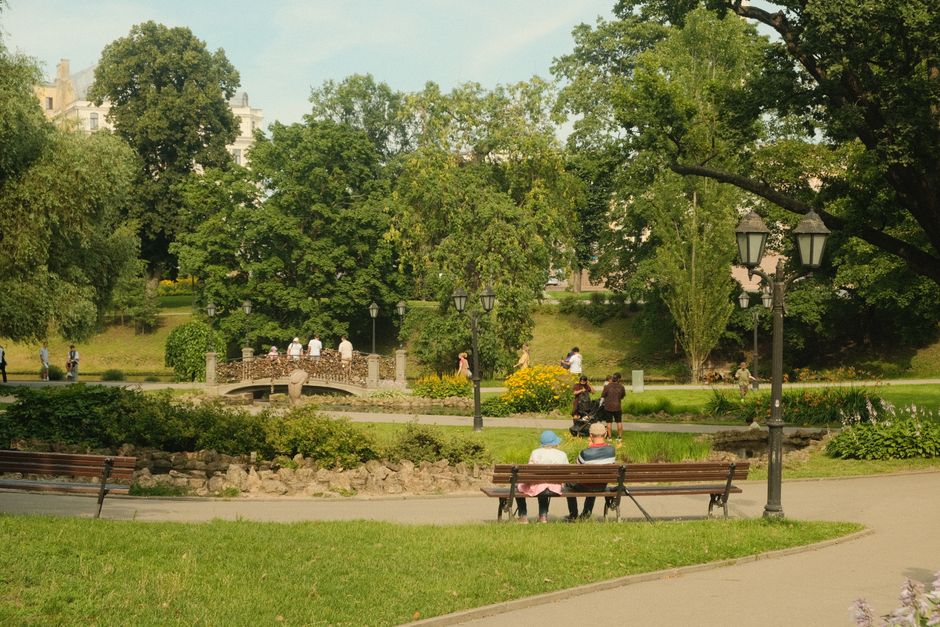
The best family weekend walk is short, planned around one fun goal, and easy enough that nobody feels trapped halfway through. Start with 20 to 45 minutes, add a small challenge, and finish before tired legs turn the outing into an argument. A successful walk builds the habit better than an ambitious hike that ends with complaints, blisters, or a child refusing to move.
Why Short Family Walks Work Better Than Big Hikes
Movement beats mileage
Children and adults do not need a long trail to gain useful movement. A 30-minute walk at a steady pace can raise breathing and heart rate, loosen stiff joints, and create a repeatable weekend routine. The real win is consistency. A family that walks 30 minutes every Saturday completes more outdoor activity over a month than a family that attempts one difficult hike and skips the next three weekends.
Short routes also leave room for stops. A child can examine a leaf, a parent can answer questions, and nobody has to race toward a distant finish point. That relaxed pace makes the outing feel like shared time rather than forced exercise.
Use a clear finish line
Pick a visible endpoint such as a playground, bridge, bakery, pond, or picnic table. Tell everyone the plan before leaving: walk to the destination, spend 15 minutes there, then return. This simple structure reduces repeated questions about distance and gives younger children a reason to keep moving.
For most families, the strongest starting target is one mile or less. Add distance only after the group completes two or three walks without pain, major fatigue, or repeated requests to turn back.
How to Choose a Route Everyone Can Finish

Use this five-point route check
- Measure the distance. Choose 0.5 to 2 miles for a mixed-age group. A loop is usually easier than an out-and-back because the scenery keeps changing.
- Check the surface. Smooth pavement, packed gravel, and wide park paths work better for strollers, scooters, and uncertain walkers than loose rock or deep sand.
- Find a safe pause point. A bench, restroom, shaded lawn, or playground gives the group a planned reset instead of an emergency stop.
- Check the exit. Know where the nearest parking area, transit stop, public restroom, and road crossing sit before the walk begins.
- Read the weather and trail notices. Heat, ice, flooding, construction, and hunting areas can change a familiar route within a week.
Match difficulty to the least-ready walker
The youngest child, older relative, or person managing a health condition sets the practical limit. That is not a weakness; it is good route design. Ask a medical professional about safe activity limits when someone has chest pain, fainting, severe shortness of breath, or a condition that makes exertion uncertain. Stop for sharp pain, confusion, unusual weakness, or breathing trouble that does not settle after rest.
Choose a route with a firm surface and frequent exits when mobility is a concern. A scenic path that can be shortened is more useful than a beautiful trail with no way back.
Seven Walk Formats That Make a Plain Stroll More Fun
Pick one activity, not seven
The walk needs a simple reason to exist. Giving the group one job creates momentum without turning the outing into a lesson or competition.
| Walk format | Suggested time | Distance | Simple activity |
|---|---|---|---|
| Color hunt | 20 minutes | 0.5 mile | Find five natural colors without picking plants |
| Photo route | 30 minutes | 0.75 mile | Take one picture of texture, shape, and movement |
| Playground loop | 35 minutes | 1 mile | Walk to a playground and schedule a 15-minute stop |
| Sound map | 25 minutes | 0.5 mile | List birds, traffic, water, wind, and human sounds |
| Snack checkpoint | 45 minutes | 1.5 miles | Carry a small snack to a planned park bench |
| Hill challenge | 30 minutes | 0.75 mile | Walk one short incline, then recover on flat ground |
| Community route | 40 minutes | 1.25 miles | Notice public art, gardens, signs, and local history |
Give the youngest person a role
Let a child carry the route card, count bridges, choose the next turn, or announce the next checkpoint. The role should reward attention rather than speed. Avoid elimination games that leave one person standing still while everyone else continues.
Keep the reward outside the car
A playground, picnic, library stop, or outdoor market gives the walk a natural ending. That works better than promising a screen or treat before the group starts, because the destination remains connected to movement and shared time.
What to Pack for a Comfortable Family Walk

Carry only what solves a real problem
For a short route, each person usually needs water, weather protection, a phone, and any required medication. The Nalgene 32-ounce Wide Mouth holds 946 milliliters and uses a wide opening that is easy to clean, but younger children may handle a smaller bottle better. The Osprey Daylite Kids provides a compact 10-liter pack for a light layer, snack, and small first-aid kit; it is useful when a child wants responsibility without carrying an adult-sized load.
For late walks, the Black Diamond Spot 400-R offers a 400-lumen maximum output and an IP67 water-resistant build. That output is more than most neighborhood walks need, so use a lower setting to protect battery life and avoid shining light into other walkers’ faces.
Use tracking gear as a bonus, not a requirement
The Garmin vívofit jr. 3 has a one-year-plus battery rating and a 5 ATM water rating. It can make step counting playful, but it should not turn a family outing into a contest that shames the slowest walker. The Apple Watch SE can provide activity and emergency features, yet its advertised battery life is up to 18 hours, so charging matters before a long day outdoors.
Verdict: water, suitable shoes, and a route plan matter more than wearables. Do not buy tracking equipment for a family that dislikes numbers; use a scavenger hunt instead.
Which Family Walk Format Should You Choose?

For low energy, choose the playground loop
The playground loop is the clearest winner for families with young children or adults returning to exercise: walk 10 to 15 minutes, play for 15 minutes, and return by the same route. It creates two movement periods, a visible reward, and an easy exit if energy drops. The color hunt is the better choice for a group that dislikes structured exercise because attention shifts toward spotting details rather than measuring distance.
For older children, choose the community route
The community route works best for children who need more independence. Let them read a map, identify public art, or lead the group between safe checkpoints. Skip the hill challenge when anyone has knee pain, balance problems, or poor heat tolerance. A shorter flat walk completed willingly is more valuable than a difficult route that teaches the family to avoid walking next weekend.
What Insurance Questions Matter for a Family Walk?
Does a normal neighborhood walk need special coverage?
A private family walk on a public sidewalk usually does not need a special policy. The useful check is personal liability coverage for ordinary accidents, plus health coverage details for urgent treatment. Standard homeowners or renters policies may include personal liability and medical-payments coverage, but limits, deductibles, exclusions, and state rules vary. A policy may also treat an organized event, paid coaching session, business activity, or rented property differently from a casual family outing.
For a charity walk, private trail, school event, or park rental, read the waiver and ask who carries responsibility for the premises and event operations. Do not assume a waiver creates coverage, and do not assume your household policy covers every activity.
| Outing type | Question to ask | Common gap to check |
|---|---|---|
| Neighborhood sidewalk | What personal liability limit applies? | Deductible and exclusions |
| Public park | Does the park require a permit? | Closed areas and unsafe surfaces |
| Organized charity walk | Who insures the event? | Waiver scope and event exclusions |
| Drive to a trail | What are the current state auto-liability minimums? | Limits that may be too low for a serious crash |
| Private club or trail | What does the membership agreement exclude? | Premises, injury, and equipment exclusions |
How should a household compare insurers?
Look at the carrier’s current AM Best financial-strength rating for an indication of claims-paying capacity, then review the latest J.D. Power regional score for customer experience. Those measures answer different questions and do not replace a policy reading. Premiums vary by state and individual factors, including location, claims history, property features, selected limits, and deductible. Get multiple quotes with matching limits so the price comparison means something.
The strongest plan is the one whose limits and exclusions fit the household’s actual activities. For a normal weekend walk, careful route planning still does more to prevent trouble than buying a policy with features the family does not understand.
A 30-minute loop to a playground, a bottle of water, and one simple game can turn a reluctant Saturday into a repeatable habit. Start with the least-ready walker, finish while everyone still has energy, and let the next weekend’s route grow from that success.
Medical Disclaimer: This content is for informational purposes only and does not constitute medical advice. Always consult a qualified healthcare professional before making health-related decisions.