
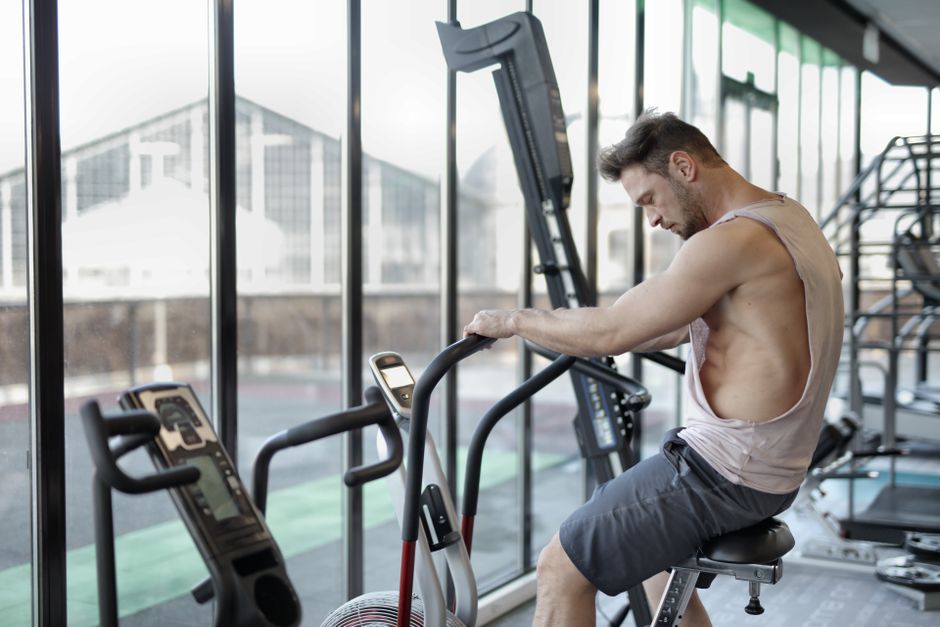
You buy the bike, clear a corner of the spare room, and start pedaling with too much resistance. Ten minutes later, your knees hurt, your shoulders are tense, and you are wondering why a workout that looked easy on screen feels brutal. I made that mistake more than once. Indoor cycling gets much easier when you solve three things first: fit the bike to your body, control your effort, and follow a simple progression instead of chasing exhaustion every ride.
Why indoor cycling works for beginners
My verdict: indoor cycling is one of the easiest cardio workouts to repeat because it removes weather, traffic, balance, and route planning from the equation. You can train in a small space, stop when something feels wrong, and adjust resistance in seconds. That control matters more than having a fancy screen.
The real problem indoor cycling solves
Outdoor cycling asks you to manage hills, cars, wind, gears, and road surfaces at the same time. A stationary bike strips the workout down to two useful controls: cadence, or how fast your legs turn, and resistance, or how hard each turn feels. Beginners can learn one skill at a time. Start with a pace that lets you speak in short sentences. Add resistance until your legs feel engaged, not jammed.
The fixed position also makes consistency easier. A 25-minute ride before work can be more useful than a long outdoor ride that happens once every two weeks. The best cardio plan is the one you can repeat while tired, busy, or slightly unmotivated.
What a good first session should feel like
Your first ride should leave you feeling capable of doing another one, not flattened on the floor. Spend five minutes easy, ten minutes at a steady pace, then five minutes cooling down. Keep your hands light on the bars and let your breathing rise gradually. If your lower back rocks from side to side, the resistance is too high or the saddle is too low.
For most beginners, three rides per week creates the right rhythm: one easy ride, one steady ride, and one short session with gentle bursts. That schedule builds repeatable fitness without turning every workout into a test of willpower.
How to set your bike fit before the first hard ride
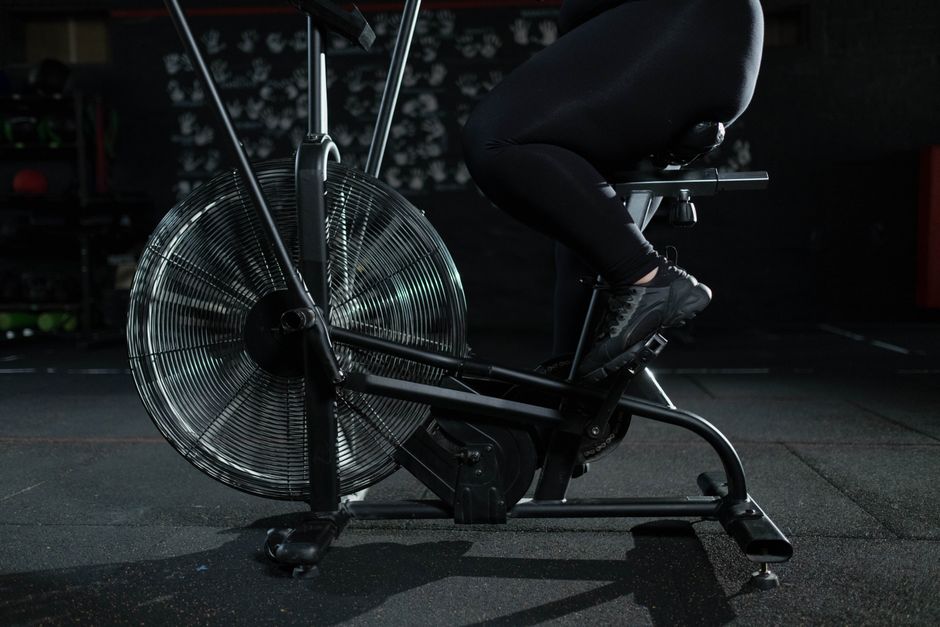
My fit verdict: adjust the saddle before changing resistance. A poor fit creates knee, hip, wrist, and back problems that beginners often blame on cycling itself. Use these steps with the bike turned off and both feet on the floor.
Set saddle height from the bottom position
- Place one pedal at the lowest point of its rotation.
- Sit on the saddle and put your heel on that pedal.
- Raise or lower the saddle until your knee is almost straight without your hip reaching down.
- Put the ball of your foot back on the pedal. Your knee should now have a small bend, roughly 25 to 35 degrees.
If your knee locks at the bottom, lower the saddle one notch. If your hips sway to reach the pedals, lower it two or three millimeters at a time. A saddle that is too low usually causes front-of-knee pain; one that is too high often causes hamstring tightness and hip rocking.
Set the fore-aft position and handlebar reach
With the pedals level, your front knee should sit roughly above the middle of the forward pedal. Move the saddle forward or back in small steps. Then raise the handlebars until you can keep a relaxed neck and a neutral back. Beginners should choose a slightly higher handlebar position. A low racing position can wait.
Fix your feet and hands
Keep your knees tracking in line with your second toes instead of collapsing inward. Press through the whole foot, not just the toes. Hold the bars as if you are carrying a paper cup: firm enough to steer, light enough that your shoulders stay down. My rule is simple: if you cannot finish an easy 20-minute ride without shifting around to escape discomfort, the fit is not finished.
Which indoor cycling setup deserves your money?
My buying verdict: most beginners should start with a reliable magnetic-resistance bike and a tablet, not the most expensive connected machine. Pay for coaching and automatic resistance only if those features will make you ride more often.
| Setup | Listed price checked in 2026 | Useful specifications | Best choice for |
|---|---|---|---|
| Schwinn IC4 | $899 sale price, $999 regular price | 100 magnetic resistance levels, 330-pound maximum user weight, 54.6 x 30.7-inch footprint | Most beginners who want app flexibility |
| Peloton Bike | $1,695 | 21.5-inch HD touchscreen, 4 x 2-foot footprint, manual resistance knob, separate membership | People who value guided classes and strong routine cues |
| Wahoo KICKR CORE 2 | $549.99 | 1,800-watt maximum power, plus or minus 2 percent accuracy, direct-drive design | Road cyclists who already own a compatible bike |
The Schwinn IC4 is my practical winner for a first dedicated indoor bike. It has enough resistance range for a new rider and enough app support to stay useful after the beginner stage. The Peloton Bike is the better motivation purchase if scheduled classes are the only reason you will show up. Its membership cost matters, so include that monthly expense before buying.
Choose the Wahoo KICKR CORE 2 only if you already own a suitable outdoor bike and enjoy training with cycling software. It is not a complete bike. You still need the bicycle, a stable floor, and time to mount it. Do not buy an expensive connected bike for a problem that a weekly calendar would solve.
A four-week beginner plan that builds fitness
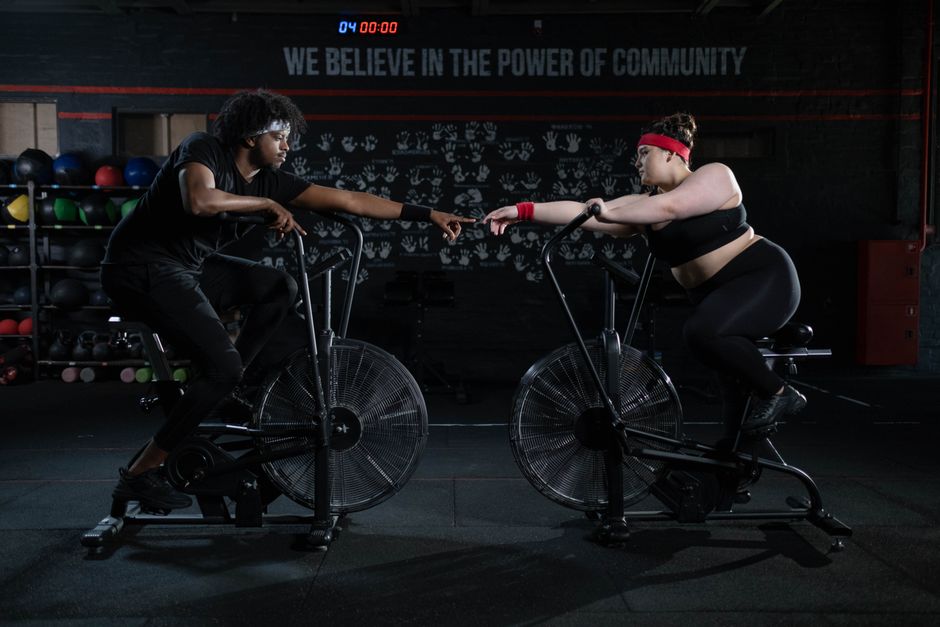
My training verdict: three rides per week are enough for the first month. Add time before adding hard resistance. A beginner who finishes four weeks consistently has made more progress than one who survives three punishing rides and quits.
Weeks 1 and 2: learn control
- Ride one: 20 minutes easy. Keep the effort at 3 or 4 out of 10.
- Ride two: 25 minutes steady. Add five 30-second quicker sections with one minute easy between them.
- Ride three: 20 to 30 minutes relaxed. Focus on smooth pedal circles and quiet shoulders.
Leave at least one rest day between rides. The short bursts should feel quicker, not desperate. If your legs feel heavy for more than a day, repeat the same week instead of progressing.
Weeks 3 and 4: add useful stress
- Make the easy ride 30 minutes.
- Turn the steady ride into three five-minute blocks with two minutes easy between blocks.
- On the third ride, add six 45-second efforts at 6 out of 10, followed by 75 seconds of easy pedaling.
Track ride time, perceived effort, and how quickly your breathing settles after each session. Do not compare raw calorie numbers between different bikes. Those estimates can vary widely. The better marker is a repeatable ride at the same effort with a slightly faster cadence or a lower recovery time.
The mistakes that stall progress and my buying verdict
My firm opinion: do not buy more equipment to compensate for a weak routine. A correctly fitted basic bike and a four-week schedule beat an expensive machine that becomes a clothes hanger.
Common mistakes I would avoid
- Starting every ride at maximum resistance. This turns cardio into a leg-strength test and makes recovery harder.
- Ignoring saddle pain. Mild pressure may improve with a better saddle or padded shorts, but sharp knee or hip pain calls for a fit change and possibly medical advice.
- Copying an advanced rider’s cadence. Your useful cadence is the pace you can hold without bouncing in the saddle.
- Training seven days in a row because indoor rides feel convenient. Muscles and connective tissue still need recovery.
- Trusting a calorie display as a precise result. Use time, effort, and performance trends instead.
When not to buy the expensive option
Do not buy the Peloton Bike if you dislike instructor-led classes or will not pay for the separate membership. Choose the Schwinn IC4 if you want a flexible platform with 100 resistance levels and a lower entry price. Do not buy the Wahoo KICKR CORE 2 unless you already own a compatible road bike and want structured software training.
For a person starting from zero, my final recommendation is the Schwinn IC4, adjusted carefully and used three times per week for four weeks. It offers enough resistance to grow with you, supports several training apps, and leaves more money for a mat, a fan, and comfortable clothing. The bike matters, but the repeatable habit is what changes your fitness.
Medical Disclaimer: This content is for informational purposes only and does not constitute medical advice. Always consult a qualified healthcare professional before making health-related decisions.