
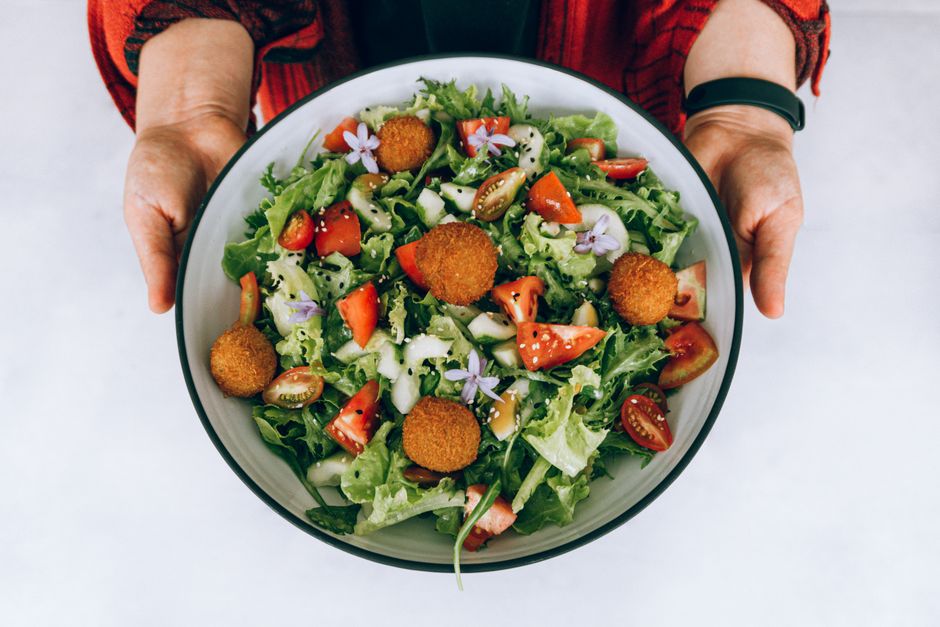
A pile of lettuce is not lunch. A filling summer salad needs enough protein, fiber, and fat to slow digestion without turning into a heavy bowl of pasta. Use the formulas below and you can build a cool, crisp meal that holds you for three to four hours.
How to Build a Light Salad That Counts as a Meal
The winning structure is simple: one protein anchor, two or three high-volume vegetables, one slow carbohydrate or legume, and a measured fat source. That combination gives you bulk, chewing, fiber, and staying power. Leave out one piece and the salad often becomes a side dish pretending to be dinner.
The four-part plate
Start with 2 to 3 cups of vegetables. Romaine, cucumber, tomatoes, cabbage, peppers, radishes, and greens add water and volume for very few calories. Add 4 to 6 ounces of chicken, fish, tofu, eggs, cottage cheese, or another protein. Then add 1/2 to 1 cup of chickpeas, beans, corn, potatoes, quinoa, or farro. Finish with 1 to 2 tablespoons of olive oil, seeds, avocado, or a yogurt-based dressing.
The satiety formula is not a magic calorie number. It is a balance of food types that makes the bowl satisfying before you need a second meal.
Use this portion guide
| Salad part | Practical portion | Good choices |
|---|---|---|
| Vegetables | 2 to 3 cups | Romaine, cucumber, tomato, cabbage, peppers |
| Protein | 4 to 6 ounces or 2 eggs | Chicken, tuna, tofu, salmon, eggs |
| Fiber-rich carbohydrate | 1/2 to 1 cup | Chickpeas, lentils, quinoa, corn, potatoes |
| Fat | 1 to 2 tablespoons | Olive oil, tahini, seeds, avocado |
For a family meal, put every part in separate bowls and let people build their own plates. That works better than forcing one dressing or one vegetable on everyone. For a fitness meal, keep the protein at the upper end and use a full cup of beans or grains after a hard workout.
Why Lettuce Alone Does Not Keep You Full
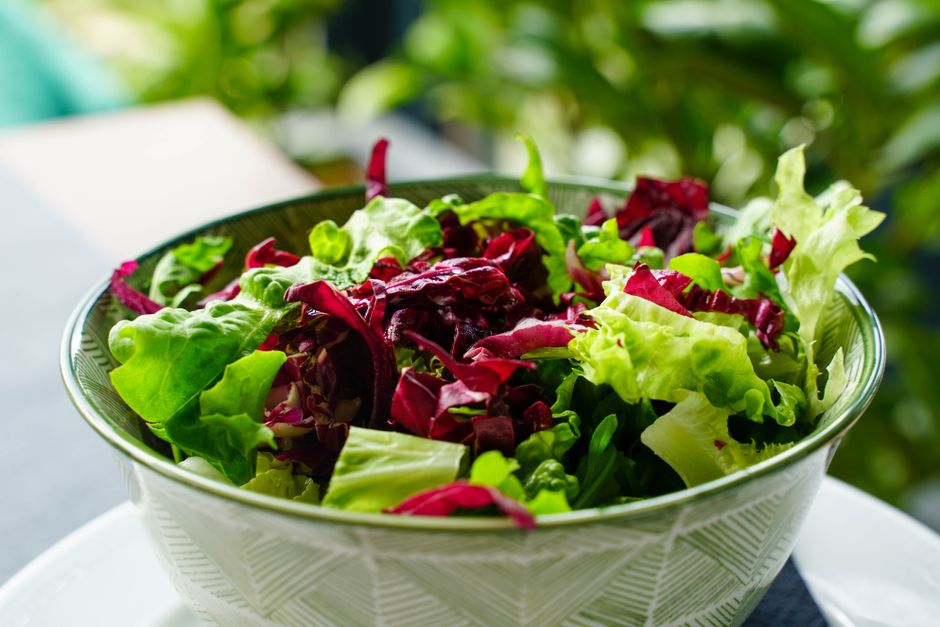
Salads fail for a basic reason: lettuce provides water and crunch, but very little protein or energy. You can eat a huge bowl and still feel hungry 30 minutes later. The problem is not that salad is too light. The problem is that the bowl lacks the parts that keep digestion steady.
Protein slows the hunger rebound
Protein supports fullness because it takes longer to digest than most raw vegetables and helps a meal feel substantial. You do not need a giant steak on top. Four ounces of chicken, a can of tuna, 150 grams of tofu, two eggs plus beans, or a cup of lentils can turn a snack-sized salad into lunch.
Spread protein across the day instead of trying to repair a weak salad with dessert later.
Fiber and fat finish the job
Fiber adds bulk and helps slow the movement of food through the digestive system. Beans, lentils, peas, berries, apples, whole grains, and seeds give you more than leafy greens can provide. Fat improves flavor and helps the meal feel complete, but the serving still matters. A tablespoon of olive oil or tahini is useful. Half a cup of oily dressing can quietly double the meal’s calories without making it much more filling.
Water-rich produce still matters. Cucumber, tomato, melon, citrus, and greens make a summer bowl refreshing. They just cannot carry the whole meal.
The Five-Minute Formula for a Filling Summer Salad
Use this assembly order when you need lunch quickly. It keeps the bowl balanced and prevents the common mistake of adding dressing first, then discovering that the salad has no substance.
Assemble it in five moves
- Choose a base: use 2 cups of greens plus one crunchy vegetable such as cucumber, cabbage, or bell pepper.
- Add a protein anchor: use 4 to 6 ounces of cooked chicken, fish, tofu, or tempeh, or combine two eggs with 1/2 cup of beans.
- Add one filling carbohydrate: choose 1/2 cup of quinoa, corn, potatoes, farro, beans, or whole-grain pasta.
- Add a sharp flavor: use lemon juice, vinegar, pickled onions, salsa, herbs, or mustard so the bowl does not taste flat.
- Measure the fat: add 1 tablespoon of olive oil, tahini, seeds, or a creamy yogurt dressing, then toss well.
Three combinations that work
- Greek-style: romaine, cucumber, tomato, chickpeas, grilled chicken, feta, oregano, and lemon dressing.
- Southwest-style: cabbage, corn, black beans, avocado, chicken, salsa, lime, and pumpkin seeds.
- Berry grain-style: spinach, quinoa, strawberries, salmon, almonds, and a plain Greek yogurt dressing.
Make the grain, protein, and dressing once and store them separately for three days. Keep wet tomatoes and dressing away from greens until serving. That small storage habit prevents limp leaves and makes the healthy choice the fast choice.
Why a Healthy Salad Still Leaves You Hungry
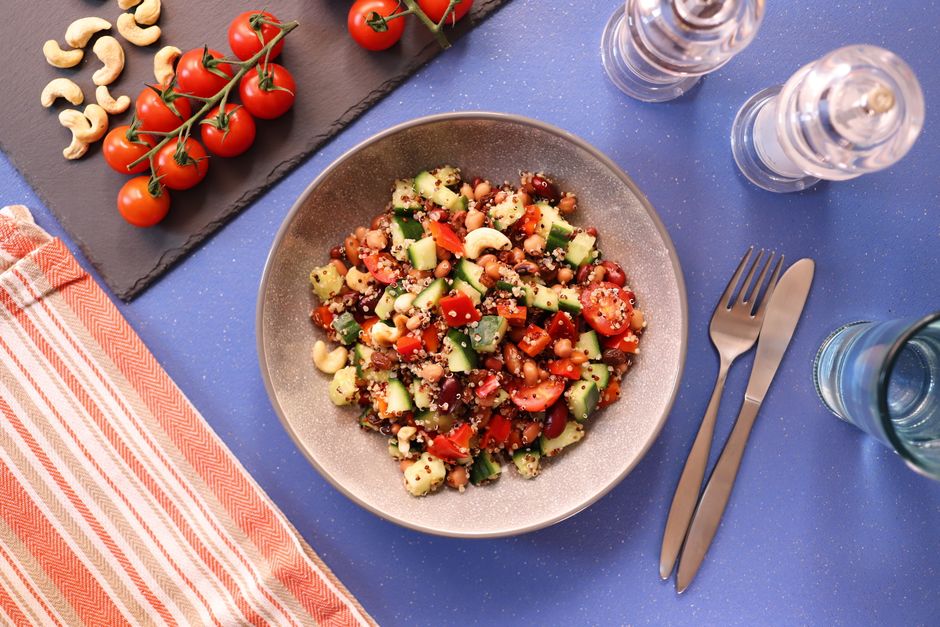
The blunt verdict: most disappointing salads are underbuilt, not unhealthy. They contain plenty of vegetables but too little protein, too little fiber, or a dressing portion so large that the meal becomes hard to judge.
calling toppings a protein
A tablespoon of pumpkin seeds, a sprinkle of feta, or a few walnuts adds useful nutrients, but it does not replace a real protein serving. Keep those ingredients for flavor and texture. Add chicken, fish, tofu, eggs, lentils, or beans as the main anchor.
using fruit as the only carbohydrate
Fruit makes a salad bright, but fruit alone may not hold you through a long afternoon. Pair berries, apples, peaches, or grapes with beans, potatoes, quinoa, or whole-grain bread. This matters most for active people and anyone eating salad after morning exercise.
drowning the bowl in dressing
Free-pouring oil makes calories hard to track, while too little dressing makes vegetables feel like punishment. Start with one tablespoon, toss for 20 seconds, and add another teaspoon only if the leaves still look dry. Yogurt, mustard, vinegar, citrus, and blended beans can create a creamy texture with less oil.
The fix is visible in the bowl: enough protein, one fiber-rich carbohydrate, and a measured dressing.
Can Salad Be Dinner? Three Direct Answers
How much protein should a dinner salad contain?
That can come from 5 ounces of chicken, a can of tuna, 6 ounces of tofu, 1 cup of lentils, or two eggs paired with beans. Smaller children need less, but they still benefit from having a clear protein option on the plate. If the salad is your post-workout meal, use the larger portion and add a starch such as potatoes, quinoa, or corn.
What is the best filling salad for a family?
The best family choice is a build-your-own Southwest bowl: shredded cabbage, romaine, corn, black beans, chicken, avocado, salsa, lime, and pumpkin seeds. It has mild base ingredients, optional heat, and enough texture for picky eaters. Serve the dressing on the side. That gives children control without turning the meal into a plate of plain lettuce.
What should you eat when salad still does not satisfy you?
Add a real side instead of making the bowl enormous. A small baked potato, a slice of whole-grain toast, fruit with yogurt, or a cup of soup can complete the meal. Do not treat hunger as a failure. Treat it as information that the first plate lacked enough protein, fiber, carbohydrate, or total food.
The most important takeaway: a light summer salad keeps you full when vegetables share the bowl with a real protein anchor, a fiber-rich carbohydrate, and a measured source of fat.
Medical Disclaimer: This content is for informational purposes only and does not constitute medical advice. Always consult a qualified healthcare professional before making health-related decisions.