
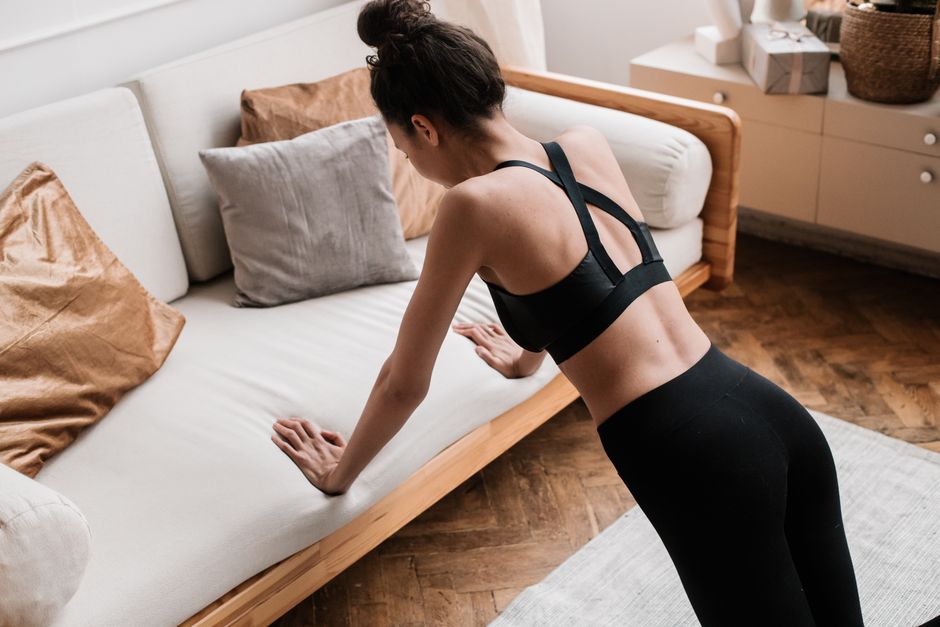
Dark winter evenings remove the easiest excuse for outdoor exercise: daylight. A well-built indoor cardio circuit replaces that missing window with short, repeatable work that fits a living room, basement, or spare bedroom.
Why dark winter evenings call for indoor cardio circuits
The main problem is not a lack of exercise ideas. It is the loss of a reliable transition between work, dinner, family duties, and sleep. When sunset arrives before the day feels finished, a long workout becomes harder to start. A circuit solves that problem by reducing decisions: choose a few movements, set a timer, and repeat a known pattern.
The first principle is repeatable effort
Cardio improves when your heart and breathing work harder than they do at rest, then recover before the next effort. You do not need a 60-minute session to create that pattern. Six rounds of 40 seconds of work and 20 seconds of easy movement can produce a useful 6-minute block. Repeat two or three blocks after a short warm-up, and the session reaches 20 to 30 minutes without requiring a large time commitment.
Darkness changes the risk calculation
Outdoor winter exercise can add wet pavement, poor visibility, ice, cold air, and traffic exposure. Indoor training removes several of those risks, but it creates its own failure points: crowded floors, low ceilings, slippery socks, poor ventilation, and noise that disturbs neighbors. The safest circuit leaves a clear path, keeps impact controlled, and lets you stop before form breaks down.
Verdict: For dark evenings, a short circuit that you can repeat four nights per week is more valuable than a demanding workout that only happens when motivation is high.
How to build a safe 20-minute circuit in a small room
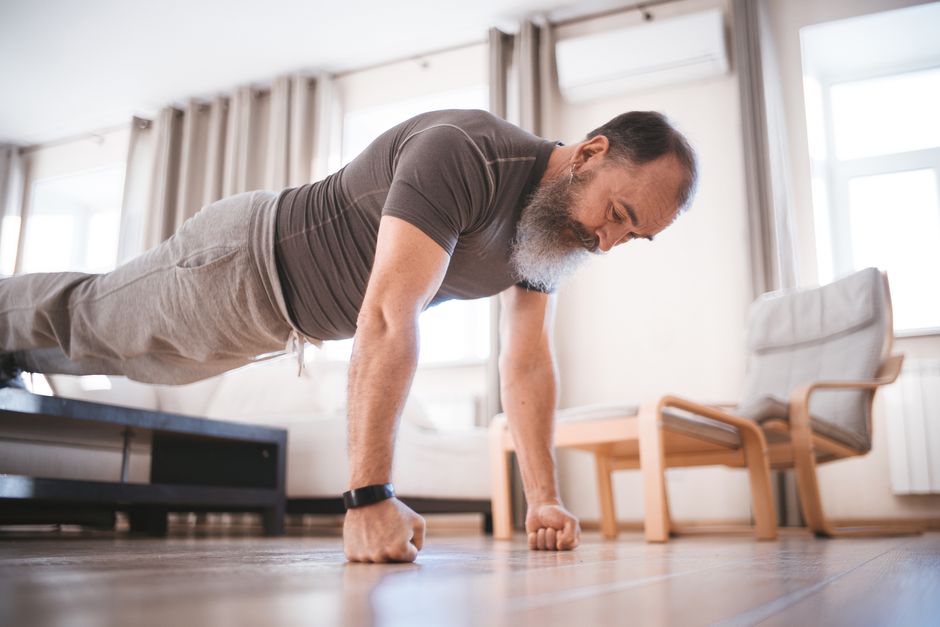
Start with the room, not the exercise. Measure a clear area of roughly 6 feet by 6 feet, move coffee tables and loose rugs, and keep at least one step of space from walls or furniture. Wear shoes with firm grip unless the floor surface is designed for barefoot training.
Use this five-part structure
- Warm up for 3 minutes: march in place, circle the shoulders, hinge at the hips, and take five slow bodyweight squats.
- Work for 40 seconds: choose one low-impact movement such as fast marching, step-ups, shadow boxing, or a controlled squat-to-reach.
- Recover for 20 seconds: walk slowly and let your breathing settle without stopping completely.
- Repeat five movements: alternate legs, upper body, and full-body patterns so one area does not fail early.
- Cool down for 2 minutes: reduce pace gradually and wait until breathing is comfortable before stretching.
Choose intensity with a simple test
Use the talk test instead of chasing a calorie number. At moderate effort, you should speak in short sentences. At hard effort, you may manage only a few words. Beginners should spend most winter sessions at moderate effort and add one harder block only after two weeks of consistent training. A heart-rate monitor can help, but it is not required for a useful home circuit.
Verdict: The strongest small-room setup is a timer, stable footwear, clear floor space, and five movements that you can perform without losing balance.
What changes for knees, neighbors, and beginners?
Which circuit is best for sore knees?
Start with marching, heel taps, supported sit-to-stands, and light shadow boxing. Keep the foot close to the floor and limit deep knee bends until you can train without swelling or sharp pain. Replace jump squats and repeated stair sprints with a slower pace and longer work intervals. Persistent pain, swelling, or instability calls for medical guidance before harder training.
How can a family train without upsetting neighbors?
Choose quiet movements after 8 p.m.: marching, cycling, rowing at controlled intensity, standing punches, and slow step patterns. Place equipment on a dense rubber mat, keep the machine away from shared walls, and avoid dropping weights. A quiet circuit can still feel hard when you shorten rest from 30 seconds to 15 seconds.
What should a complete beginner do first?
Use 20 seconds of work and 40 seconds of recovery for five movements. Complete two rounds, then stop while technique still looks clean. Add a third round after the session feels manageable for two weeks. The clear winner for beginners is controlled consistency, not maximal intensity.
Verdict: For knees, neighbors, and beginners, low-impact movements with controlled breathing are the safest starting point.
How to schedule circuits through the winter
A winter plan needs enough structure to survive dark evenings but enough variation to avoid boredom. Four sessions per week works well for many healthy adults: two moderate circuits, one harder interval session, and one easy recovery session. Families can use the same timetable with different work periods, which keeps the room active without forcing every person to train at the same intensity.
A practical seven-day schedule
| Day | Session | Work pattern | Decision rule |
|---|---|---|---|
| Monday | Moderate full-body circuit | 5 movements, 40 seconds on, 20 seconds off, 3 rounds | Finish able to speak in short sentences |
| Tuesday | Easy movement | 15 to 25 minutes of walking, marching, or mobility | Keep effort light |
| Wednesday | Short interval circuit | 6 rounds of 30 seconds hard, 60 seconds easy | Stop if form becomes unstable |
| Thursday | Rest | No planned cardio | Sleep and recover |
| Friday | Family circuit | 20 seconds on, 40 seconds off, 2 to 3 rounds | Choose quiet, low-impact movements |
| Saturday | Optional longer session | 25 to 40 minutes at moderate effort | Skip it if fatigue or pain lingers |
| Sunday | Rest or gentle mobility | 10 to 15 minutes | Prepare the room for Monday |
How to progress without overtraining
Change one variable at a time. Add one round, reduce recovery by 5 seconds, increase the movement range, or add resistance. Do not raise all four at once. Track the date, circuit length, perceived effort, and any pain in a simple note. If sleep worsens, soreness lasts more than 48 hours, or performance drops for several sessions, reduce volume for one week.
Takeaway: The best indoor cardio circuit for a dark winter evening is the quiet, measurable session you can perform safely and repeat every week.
Medical Disclaimer: This content is for informational purposes only and does not constitute medical advice. Always consult a qualified healthcare professional before making health-related decisions.