
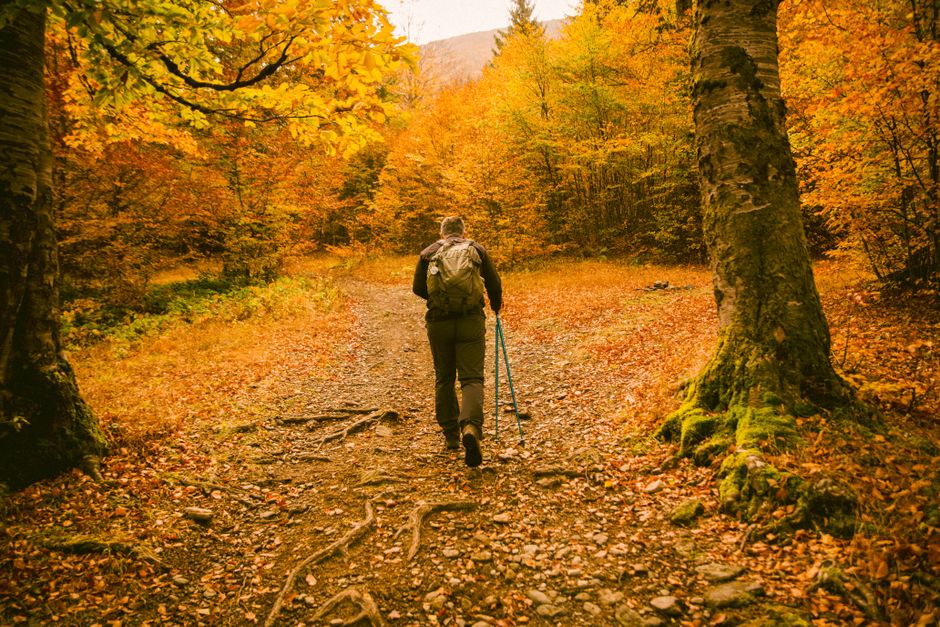
You leave home in a T-shirt because the afternoon forecast says 68°F. Ninety minutes later, the trail sits in shade, wet leaves cover the rocks, and the temperature feels closer to 50°F. Your child is tired, the last water bottle is nearly empty, and sunset is closer than expected.
Early autumn trails reward simple planning. Pick a route that matches your group, pack for a 10–20°F temperature swing, and turn back before the trail becomes a problem. These are the early-autumn hiking basics that keep a pleasant walk from becoming a rescue story.
Why early autumn trails need a different plan
Recommendation: treat early autumn as a changeable season, not a mild version of summer. The air may feel warm at the trailhead while shaded ground stays cold and damp. Leaves hide roots, stones, and puddles. Lower sun creates glare in the morning and long shadows in the afternoon. A trail that felt easy in July can demand more balance and attention in October.
Temperature changes affect effort
Cooler air often makes walking feel easier at first, so people start too fast. That creates a problem on climbs, especially for children, older adults, and anyone returning to exercise. Begin at a pace that allows normal conversation. Add a light layer before you feel cold, because stopping beside a windy ridge can make the temperature drop feel sudden.
Daylight changes the safety margin
Check sunset, then set a turnaround time at least 60 to 90 minutes before darkness. Families should choose a loop shorter than their maximum comfortable distance. A four-mile route with several steep sections may take longer than a flat five-mile rail trail. Early autumn also brings more hunters in some regions, so check local notices and wear a bright color during legal hunting seasons.
The winning approach is conservative: start earlier, choose a familiar trail, and leave enough daylight for a slow return.
How to choose a safe trail for your group
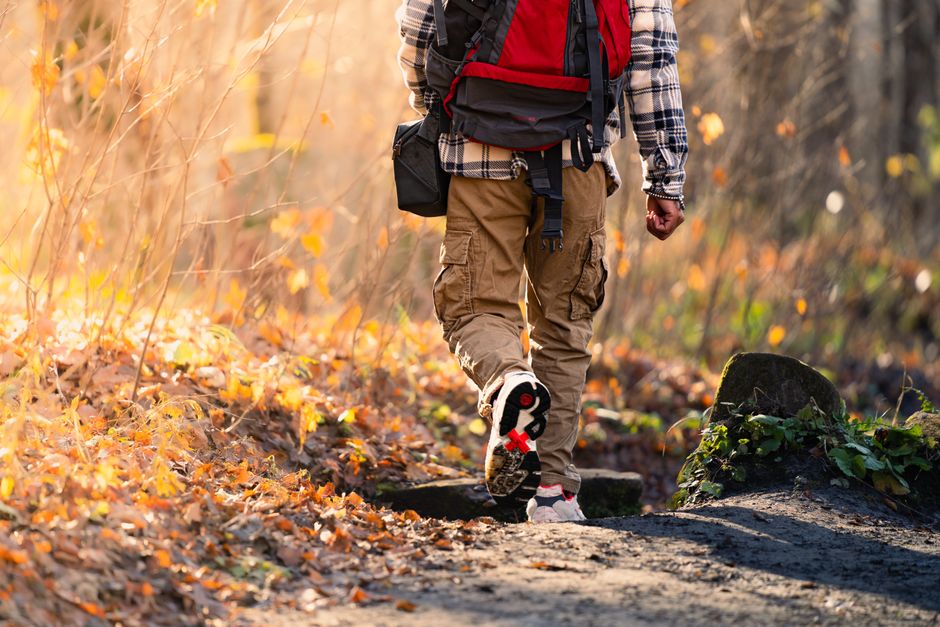
The best early-autumn route is the one your slowest walker can finish with energy left. Distance alone tells you very little. Surface, elevation, shade, water crossings, cell coverage, and exit points matter just as much.
Use this six-step route check
- Match distance to recent activity. For a family that walks twice a week, start with 2–4 miles and less than 500 feet of elevation gain.
- Study the surface. Packed gravel and broad dirt paths are safer after rain than steep roots, smooth rock, or narrow ledges.
- Check the weather twice. Read the forecast the night before and again three hours before departure. Look for rain, wind, heat, and early sunset.
- Find bailout points. Choose routes with road crossings, nearby parking areas, shelters, or shorter loop options.
- Confirm water and restroom access. A trail map may show a stream, but that does not mean the water is safe to drink or available in a dry spell.
- Tell one person your plan. Share the trail name, starting point, group size, and expected return time.
Pick the right difficulty, not the most impressive view
A moderate route with stable footing beats a scenic route that forces repeated scrambling. For children, use a trail with something to observe every 10 minutes: a bridge, stream, overlook, or marked nature feature. That keeps the walk engaging without turning the day into a race.
Skip exposed ridges during high wind, creek crossings after heavy rain, and unfamiliar trails that lose phone service before the first junction. A shorter trail with clear markers is the strongest choice for a first autumn outing.
How should you pace, fuel, and hydrate?
How fast should a family walk?
Use the talk test: everyone should speak in full sentences without gasping. Walk slowly for the first 15 minutes, then settle into a steady pace. Let the slowest person lead on climbs. This prevents the front of the group from creating a gap that grows at every turn.
When should you eat?
Eat a small snack before hunger becomes urgent, usually every 60 to 90 minutes. Good trail choices include a banana, pretzels, a peanut-butter sandwich, dried fruit, or a granola bar with at least 150 calories. Combine carbohydrates with a little protein for longer walks. Heavy meals right before a climb often cause stomach trouble, so keep lunch modest until the route flattens.
How much should you drink?
Start hydrated, then take several small drinks instead of waiting for intense thirst. A practical starting point is 0.5 liter per person per hour in warm conditions, with more on exposed climbs. Children may need reminders because they often focus on the trail rather than thirst. For walks under two hours, plain water and salty food usually cover the basics; sports drinks make more sense during heat, heavy sweating, or a much longer outing.
The clearest verdict is simple: slow down before someone feels exhausted, eat before anyone feels shaky, and turn around before your water reserve becomes a concern.
Which autumn hiking mistakes cause the most trouble?
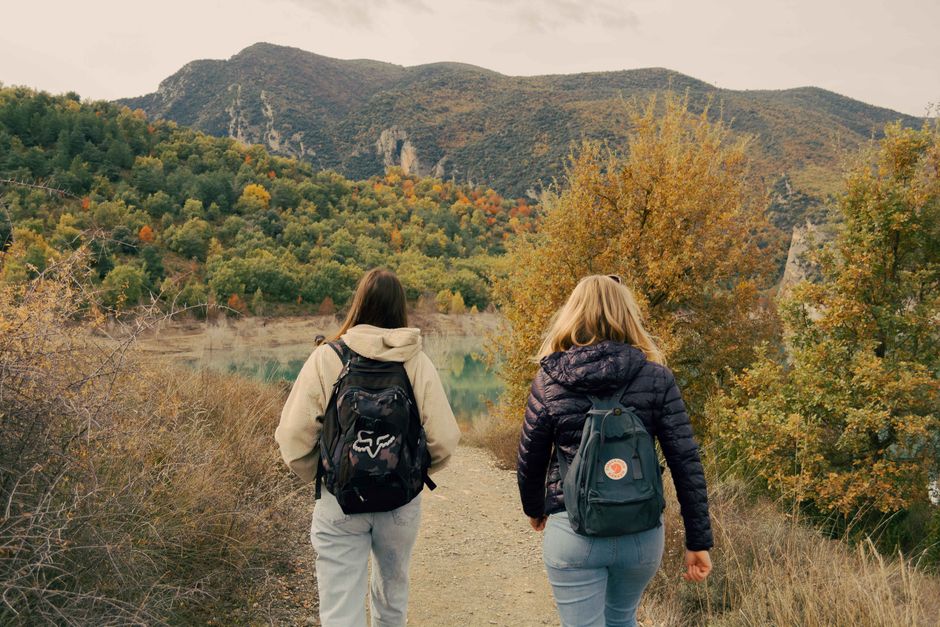
The biggest errors happen before the trail becomes difficult. People plan around the parking-lot temperature, trust a phone battery that is already low, or assume a familiar summer route will have the same footing after leaf fall. Early autumn rewards a short pre-hike check and punishes casual shortcuts.
ignoring wet leaves and hidden obstacles
Wet leaves can act like loose gravel on smooth rock. They also conceal roots, holes, and branches. Shorten your stride, keep your knees slightly bent, and place each foot where you can see firm ground. Trekking poles help on steep descents, but they do not replace careful footing. If a bridge or rock crossing looks higher and faster after rain, use the marked alternate route or turn back.
carrying too little for a delayed return
A blister, wrong turn, or tired child can double the planned time. The basic reserve is a warm layer, rain shell, headlamp, food, water, first-aid supplies, and a charged phone.
The best early-autumn setup for each type of hiker
For most families, the best setup is a 2–4 mile marked loop, layered clothing, one 20-liter daypack, and a turnaround time set before sunset. That combination handles the most common autumn problems without loading everyone down with gear.
Choose the setup that matches the outing
The practical winner for a first early-autumn outing is the simplest option: a short, marked trail, a steady pace, enough water, and one warm layer per person.
Medical Disclaimer: This content is for informational purposes only and does not constitute medical advice. Always consult a qualified healthcare professional before making health-related decisions.