
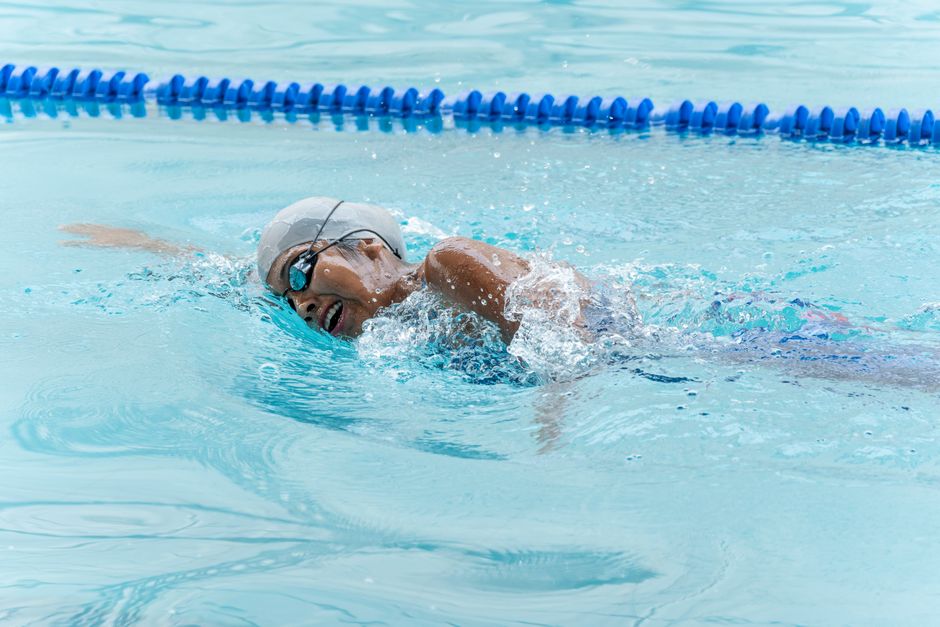
You arrive at the pool with 30 minutes before work, climb into the nearest lane, and discover that swimming feels much harder than walking or cycling. After two lengths, your breathing is rushed, your legs sink, and you are unsure if you should stop or push through. That first session is normal. Beginner swimming gets easier when you control the pace, rest before your form falls apart, and treat each length as a skill practice rather than a test of toughness.
What should a beginner do in a first pool session?
Use distance and rest as your starting point
A first workout should teach you how the pool feels. A standard pool may be 25 yards or 25 meters long, and that difference matters when you track distance. Start with one easy length, rest for 20 to 40 seconds, and repeat. You should finish each repeat able to speak a short sentence. If you hold your breath, sprint the first length, or rest until your heart rate fully settles, the session stops teaching steady swimming.
A simple 30-minute pool schedule
| Block | Work | Rest | Purpose |
|---|---|---|---|
| Warm-up | 4 easy lengths | 20 seconds after each | Raise body temperature and find a relaxed stroke |
| Breathing practice | 4 lengths, exhaling underwater | 30 seconds | Reduce breath-holding and neck tension |
| Main set | 8 lengths at an easy, steady pace | 30 to 45 seconds | Build repeatable endurance |
| Drill set | 4 lengths of kick or single-arm work | 30 seconds | Improve body position and coordination |
| Cool-down | 4 relaxed lengths | As needed | Lower effort without stopping suddenly |
That schedule totals 24 lengths, or 600 yards in a 25-yard pool. If the distance feels too high, cut the main set to four lengths. The correct first workout is the one that leaves you ready to return in two or three days.
How hard should beginner lap swimming feel?
Use a talk test instead of chasing speed
Swimming effort can rise quickly because breathing is restricted by the stroke. For most early sessions, stay near RPE 3 to 4 on a ten-point effort scale. You should feel warm and focused, but not desperate for air. A useful talk test is simple: after a length, you should be able to say five to eight words without gasping. If you cannot, add rest or switch to an easier stroke.
- Swim one length at a pace you could repeat six times.
- Rest until your breathing becomes controlled, usually 20 to 45 seconds.
- Repeat the length without sprinting the final few strokes.
- Stop the set when your hips drop, your kick becomes frantic, or you start lifting your head to breathe.
Set a weekly rhythm you can maintain
Two sessions per week work well for a new swimmer. Leave at least one rest day between sessions so your shoulders and upper back can recover. After two weeks, add four to eight lengths to one workout, not both. Keep one session easy and use the other for drills or short intervals. A beginner who swims twice weekly for six weeks will gain more useful fitness than someone who swims hard once, develops shoulder pain, and quits.
Your first measurable win is completing the same number of lengths with less rest and calmer breathing.
Why do swimming drills improve fitness and stroke control?
Drills isolate one problem at a time
Freestyle asks your arms, legs, trunk, and breathing pattern to work together. When all four parts break down at once, you cannot tell what caused the problem. Drills reduce the number of moving parts. A kick drill shows if your legs create propulsion or only drag. A single-arm drill reveals if you cross the center line or rotate too far. A side-balance drill teaches you to keep one goggle in the water while turning to breathe.
Drills are not a replacement for normal swimming. Use 25 to 100 yards of drill work inside a session, then return to full-stroke swimming and keep the new sensation. The goal is transfer. If a drill looks tidy but your regular freestyle does not change, shorten the drill and add it between easy lengths.
Three drills with clear instructions
- Side kick: Extend the lower arm, keep the upper arm beside your thigh, and kick gently while breathing to the side. Switch sides every 25 yards. This teaches balance and a steady head position.
- Single-arm freestyle: Keep one arm extended while the other completes the stroke. Breathe toward the extended arm. Swim slowly enough to feel your shoulder and hip rotate together.
- Six-kick switch: Kick six times on one side, take one stroke, rotate to the opposite side, and repeat. This links body rotation to the pull without demanding speed.
Know when a drill has done its job
A drill works when it improves one clear detail during ordinary swimming. For example, after side kick, your head should feel quieter during freestyle. After single-arm work, your hand should enter in front of the shoulder instead of crossing toward the center. If your neck, shoulder, or lower back hurts, stop the drill. Discomfort from effort is different from sharp pain or a joint that feels unstable.
Which pool basics do beginners usually get wrong?
Do I need to hold my breath?
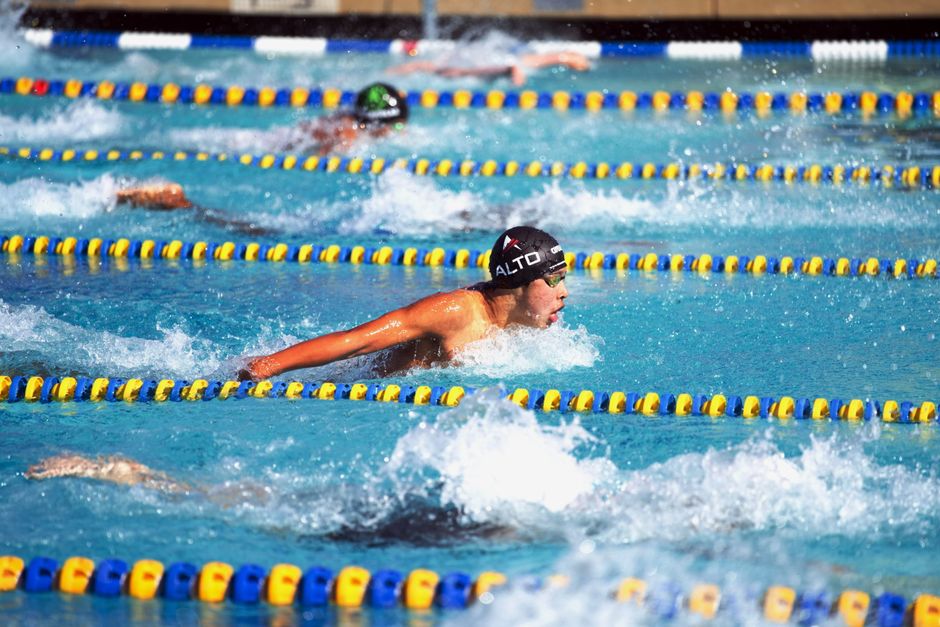
No. Holding your breath creates pressure and makes the next inhale feel urgent. Start exhaling as soon as your face returns to the water. Release air through your nose and mouth in a steady stream, then turn your head only far enough to clear your mouth. The breath should follow the body roll; your head should not lift independently. Practice this beside the wall before adding it to repeated laps.
Should I kick harder to swim faster?
Usually not. A hard, wide kick can raise your heart rate while adding little forward movement. Keep the kick narrow, begin it from the hip, and let the ankles stay loose. For many beginners, a calmer kick creates more usable energy for the pull and breathing pattern. Use a kick set for focused practice, but do not turn every lap into a leg sprint.
How much rest is too much?
Rest is too long when every repeat feels like a separate workout and your body never learns to recover while moving. Rest is too short when your technique collapses before the set ends. Begin with 30 seconds after each length, then adjust by five or ten seconds. The right rest period keeps the next length controlled, not heroic. A clean 25-yard repeat has more value than a rushed repeat followed by a long struggle at the wall.
What should a beginner do during the first month?
Weeks one and two
Swim twice each week for 20 to 30 minutes. Use four easy lengths to warm up, then repeat four sets of two lengths with 30 to 45 seconds of rest. Place one drill length between ordinary freestyle lengths so your technique has time to settle. Keep the effort at RPE 3 to 4, and record only three numbers after each session: total lengths, longest relaxed repeat, and average rest. That small record shows progress without turning the pool into a stopwatch contest.
Weeks three and four
Add one extra repeat to the main set or reduce each rest period by five seconds, but do not make both changes in the same week. If you cannot reach that distance, shorten the repeats and continue. Swimming fitness grows from repeated calm exposure: cleaner breathing, steadier body position, and enough recovery to come back for the next session. The pool rewards patience more reliably than force, and that remains true as beginner workouts become longer and more varied.
Medical Disclaimer: This content is for informational purposes only and does not constitute medical advice. Always consult a qualified healthcare professional before making health-related decisions.